Valentine's Day is tomorrow, so love is in the air. Plus, the Academy Awards and its celebration of the best films of the previous year is coming up on Feb. 22. That got me thinking back to one of my favorite movies in recent years, the romantic dramedy Silver Linings Playbook. To my chagrin, I saw the movie long before I read the novel, so I tried to make amends for that this year.
The Silver Linings Playbook (2008)
Written by Matthew Quick
Narrated by Ray Porter
Run Time: 7 hours 18 minutes
Publisher: Blackstone Audio/Farrar, Straus and Giroux
Sports fans are some of the craziest people around. Whenever the Los Angeles Lakers win an NBA championship, police get put on tactical alert because there have been riots, car fires and general mayhem in the past. When the Vancouver Canucks lost to the Boston Bruins in Game 7 of the 2011 Stanley Cup on home ice, fans set fires, looted stores and destroyed cars.
In the case of Pat Peoples, he's a diehard Philadelphia Eagles football fan who is let out of a Baltimore mental facility, or "the bad place" as he calls it, when the book begins. As he reconnects with family and friends, he hopes to reconnect with his wife Nikki and end "apart time." When over at a friend's house, he meets Tiffany, who herself has had issues stemming from the loss of her husband. From there, it's a mix of football games, a dance, therapy sessions, running and awkward social moments as the two literally run with each other and start to fall in love, albeit in an unlikely way.
The book was a complete joy to listen to and was a real page-turner. I devoured this book in two days and was hooked from start to finish. At one point, I laughed hysterically on a lunch break at my work, inadvertently spooking a co-worker. I was rooting for Pat and Tiffany most of the way, even as their relationship is messy and tangled with challenges. The side characters are a joy as well, particularly Pat's brother and therapist. Porter's narration is spot on, with each character clearly discernible and he often switches from voice to voice without any noticeable difficulty.
Grade: 4/5 stars. The book is a ton of fun on audiobook while still telling a compelling love story that even those with major mental health challenges can find their silver lining.
Silver Linings Playbook (2012)
Written for the screen and directed by David O. Russell
Rated R for language and some nudity
Run Time: 2 hours 2 minutes
Distributor: The Weinstein Company
Before the book was even published, Hollywood studios were aiming to make it into a film. Renee Witt, an executive at The Weinstein Company, convinced founder and major Hollywood producer Harvey Weinstein to option the film rights. Four years later, the movie was a smash hit made on a $21 million budget, earning more than $130 million at the North American box office.
The film version of Silver Linings Playbook comes from the Jurassic Park school of screenplay adaptations where the basic structure of the story remains, but a lot of the details and sometimes whole sequences are added or removed. That's not to say the adaptation is bad. I love both of those films, but then again, I saw the movie first and the book much later in both cases. Screenwriter and director David O. Russell admitted to the Huffington Post that he rewrote the screenplay 20 times over a five year period because he was trying to get the tone balance right between the romance and humor aspects and the serious depictions of bipolar disorder and obsessive compulsive disorder.
The changes from book to celluloid are numerous, but here are a few. For starters, character names are tweaked and both the brother and therapist, two of my favorite characters in the novel, are featured far less in the movie than the book. Also, Kenny G and his tune "Songbird" terrorize Pat in the book, forcing him to often "close my eyes, hum a single note and count to ten." In the movie, the song that haunts him is Stevie Wonder's "My Cherie Amour." Pat's dad is markedly different in both versions. In the book, he's very distant, moody and obsessive whereas in the movie, he has a gambling problem in addition to being obsessive compulsive. Pat's condition is never spelled out in the novel, though it's strongly hinted that he suffered a traumatic brain injury, while in the movie, he's diagnosed as bipolar.
The scene in the diner is vastly different from the book as well as the dance scene, which the movie makes out to be a major competition and in the book, it's more casual. The movie essentially ends at the dance, but it happens at about the 3/4 mark of the book. By extension, the endings have the same net result, but very different ways of getting there. Personally, as much as it is a "Hollywood" ending, I like the film version better in part because it has my favorite line in the movie, delivered by Robert DeNiro:
Grade: A-. Terrific performances from the ensemble cast (Bradley Cooper, Jennifer Lawrence, Robert DeNiro, Jackie Weaver and Chris Tucker) and the film's sensitivity to its depictions of mental illness make for a movie that didn't follow the book, but still maintained its spirit.
The movie was nominated for eight Academy Awards, including Best Picture, Best Director, all four acting categories and Best Adapted Screenplay. It lost the Best Picture race to the Iranian hostage drama Argo, a fantastic movie in its own right. Ironically, Jennifer Lawrence took home the movie's sole win (Best Actress) despite Russell's initial concerns that she was too young for the part. While the actors were already established by the time the movie came out, the film did propel the musical group The Lumineers to stardom, thanks to their song "Ho Hey" ("I belong with you, you belong with me, my sweetheart") being used in many of the film's ads and trailers.
Have you seen the movie or read the book? Is there a version you prefer?
Book reviews, analysis of book-to-film adaptations, commentary on the latest from the world of publishing, and a few extras along the way.
Showing posts with label book to film adaptation. Show all posts
Friday, February 13, 2015
Friday, January 2, 2015
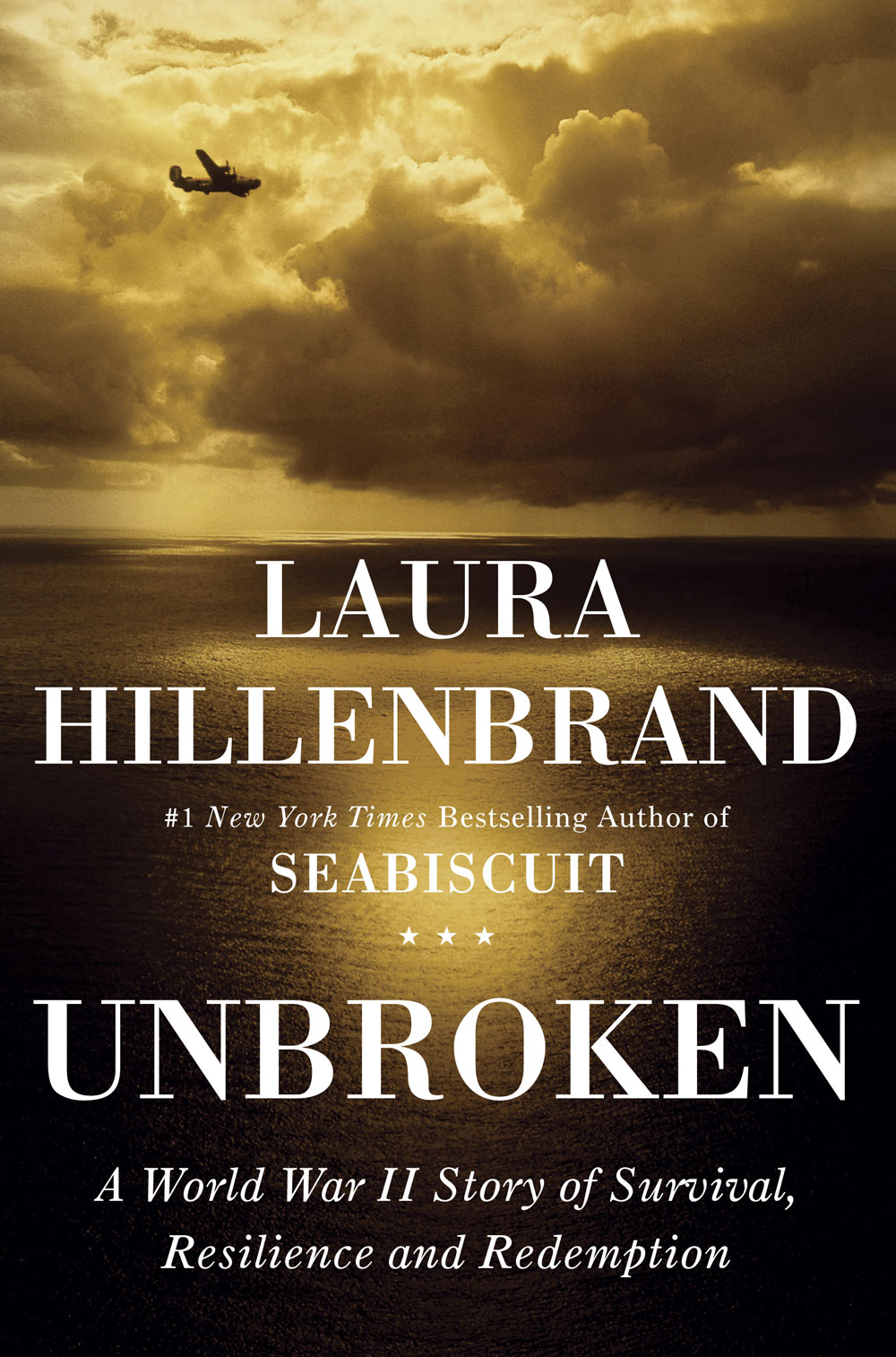
Film Friday: Unbroken
Every so often, a book comes along that has sky-high expectations and it manages to surpass them. That was the case with Laura Hillenbrand's 2010 masterpiece, Unbroken. After my stepmom wouldn't stop raving about Edward Herrmann's performance on the audiobook version, I finally trudged down to Vroman's Bookstore in Pasadena and bought it in hardcover, a rarity for me. I was afraid the book would be a letdown after all the hype and praise showered onto it. Thankfully, the book was thoroughly and utterly impressive.
When reading the book, there were many times when I would gasp at what was happening to Louie, scaring my roommate in the process, then laugh at a humorous paragraph the next page over. Hillenbrand perfectly captured Zamperini's ability to overcome the horrors he was experiencing and pursue life.
However, my main gripe with the film stems from one issue that manifests itself in two different ways. Louie's fellow prisoners are fully fleshed-out in the book, whereas in the movie, they are seldom discernible from one another. That's not to say they were poorly acted, but rather they just didn't have much to do or say to distinguish themselves as more than fellow POW's. I was willing to forgive this though because of the film's run time. Some things were going to get trimmed from the word go.
But some of the most powerful moments in the book were trimmed as well, namely Louie's return home and some of his Berlin Olympics hijinks. When Louie returned home from the war, life was not as rosy as the film's final shot made it appear (I sat there in the theater muttering to myself "Don't end it here, don't end it here," only to groan when the credits rolled). Louie hit rock bottom and his wife nearly left him, but managed to convince him to go to a Billy Graham revival that would change his life in more ways than one. This is partly what lead him to want to forgive his captors, which is hinted at briefly in the closing seconds of the movie, but could have been greatly expounded on.
Louie's son Luke wrote an online column explaining the film's ending and giving it his approval, particularly that the film wasn't "forcing (Louie's Christian faith) down people's throats," to quote Louie's autobiography Devil at My Heels. However, I respectfully contend that there had to be a happier medium between full-blown dogma and what was on the final cut. It's quite the jump to go from him returning home, then a title card explaining that he forgave his captors.
Grade: B-. It's not a bad movie per se, but as seems to be the case with most adaptations, my first recommendation is the book.
Have you seen or read Unbroken? What did you think?
I don't usually like to be overly effusive in reviews with platitudes like "mesmerizing" or "triumphant," but Unbroken got those raves from book critics around the world and then some and earned every single one. The story of Louie Zamperini's upbringing, harrowing survival through World War II including a plane crash and POW camp, plus his rocky return home are expertly detailed, with no stone left unturned and every last detail written with a strong sense of empathy. That's classic Hillenbrand and a style I've tried to emulate in my own writing, particularly in two feature series I was writing for the newspaper this past spring, coinciding with me reading her book.
As I set out to write this review, I grabbed my copy of the book and perused through it again, the first time in nearly a year. My roommate walked by and said with some exasperation, "You're reading that again?" I answered, "I'm writing a review on it, but I'd absolutely reread this. You should try reading it some time."
The last two years, my yearly reading seemed to have one book act as the cannon that propelled reading through the year. In 2013, that book was Jurassic Park. In 2014, after a couple of misfires with other texts, it was Unbroken. Like a pace car leading the pack at the Indy 500, this was the book every other one in the year, fairly or unfairly, was trying to chase in terms of quality.
Grade: 5/5. Only the second book in 2014 to earn that rating, mostly because I try to be judicious in handing these out (some reviewers, particularly on Goodreads, hand them out like candy). The other is here.
One quick note: My condolences to the families of Louie Zamperini and Edward Herrmann. Zamperini was named the Grand Marshal of this year's Rose Parade, but passed away in July at the age of 97. His son Luke filled in at the parade. Louie was an avid University of Southern California Trojan alum and made frequent visits there in his later years. Herrmann passed away earlier this week at the age of 71. I didn't have the pleasure of listening to the audiobook version of Unbroken, but based on my stepmom's reaction to his narration and the many glowing reviews of it online, it will be a hallmark of his career, along with his other narrations and acting performances such as Gilmore Girls, for years to come.
During the Sochi Winter Olympics in February, NBC aired a teaser trailer for the film version of Unbroken narrated by former NBC Nightly News anchor Tom Brokaw...
To say that I was excited for the movie would be an understatement. I figured that it'd be a long movie, since the book itself tops out at more than 400 pages (excluding notes). When the run time of 2 hours 17 minutes was announced, I admit, I was getting concerned. Critic ratings started pouring in on websites like Rotten Tomatoes and the early word wasn't good (it started at less than 50% on the Tomatometer and as of this writing, it's at 51%). My worries were starting to come true.
In terms of the film's craftsmanship, Unbroken is excellent, particularly the cinematography by Roger Deakins and musical score by Alexandre Desplat. The production design is sound and Jack O'Connell delivers a fine performance as Louie as does Miyavi as the villainous prison warden nicknamed "The Bird." Much has been made of Angelina Jolie directing and for the most part, I thought she did a capable job.
But some of the most powerful moments in the book were trimmed as well, namely Louie's return home and some of his Berlin Olympics hijinks. When Louie returned home from the war, life was not as rosy as the film's final shot made it appear (I sat there in the theater muttering to myself "Don't end it here, don't end it here," only to groan when the credits rolled). Louie hit rock bottom and his wife nearly left him, but managed to convince him to go to a Billy Graham revival that would change his life in more ways than one. This is partly what lead him to want to forgive his captors, which is hinted at briefly in the closing seconds of the movie, but could have been greatly expounded on.
Grade: B-. It's not a bad movie per se, but as seems to be the case with most adaptations, my first recommendation is the book.
Have you seen or read Unbroken? What did you think?
Friday, December 5, 2014
Film Friday: Playing the Enemy (a.k.a. Invictus)
About a month and a half after the September 11th attacks, the World Series pitted the upstart Arizona Diamondbacks against the powerhouse New York Yankees in what many observers of the sport consider to be one of the best playoff series of all time. But more importantly for the country, the seven-game series was something to rally around, a sign of life returning to normal. It was a moment of people coming together through sport.
John Carlin's Playing the Enemy (2008, Penguin) paints a stirring picture of a nation, South Africa, transitioning out of apartheid hatred and unifying around sport. But to call it a sports book would be a severe disservice, because Playing the Enemy manages to elevate beyond a simple sports story. In journalism, the term is "sports feature writing," where sports ties into a larger social issue and Carlin does it fantastically.
Several friends of mine have visited South Africa (one even stayed) and I found myself fascinated by that country. Carlin's book gives a thorough history of the internal struggles within South Africa leading up to the 1994 election of Nelson Mandela and the 1995 Rugby World Cup, which the country hosted. Mandela was a political genius and Carlin traces how he managed to meet with white leaders F. W. de Klerk and P. W. Botha and eventually be released from prison. Then, he bet his political capital on the Springboks national rugby team, captained by Francois Pienaar, to unite the nation during the World Cup. Carlin also tells the story of the Viljoen brothers who were split on the issue of ending apartheid and gives equal time to black aspirations of newfound equality and white fears of a vengeful Mandela. As the World Cup got closer and closer, the book veers more toward the sports aspect.
Carlin presents the story with a wide scope and I knew much more of South Africa's terrain, culture, demographics, and history than I did prior to picking up the book. Sports fans may feel like they're plodding though the first two-thirds of the book in order to get to the rugby action and conversely, politicos may be less interested in the rugby, but save for a bit of a slow-down in the middle of the book, I was invested from page to page. And that's the definition of a good read. Grade: 4/5 stars.
In the holiday season of 2009, Warner Bros. released two high-quality sports films based on books of true stories. The first, football drama The Blind Side, won Sandra Bullock an Oscar and was nominated for Best Picture, but lost to The Hurt Locker. The second film, South African rugby drama Invictus, was met with mostly positive but not rapturous reviews like previous Clint Eastwood-directed films. Morgan Freeman and Matt Damon were both nominated for Oscars, but they, and the rest of the film's crew, came home empty-handed. Damon lost to Christoph Waltz for Inglourious Basterds while Freeman lost to Jeff Bridges for Crazy Heart.
Invictus tries to straddle both the sports aspect of the story and the political and as a result, it has a few quirks. Audiences unfamiliar with how rugby is played will be a bit lost in following the action. Also, the book's history of the years leading up to Mandela's release from prison and first few years after is completely cut from the film, save for a scene where the team visits Robben Island prison. However, the film's overall theme of sports acting as a unifier in a post-apartheid world shines through in several scenes, including one where the team does a publicity visit to a black village...
And my favorite scene in the movie, when Pienaar, played by Damon, meets with Freeman's President Mandela and they discuss how to make people perform better than they first thought possible...
Had I not read the book, I'd score Invictus a bit higher, but knowing that the whole back history was cut dampens the movie. The book itself is a slice of South African history and the movie is a slice of the slice. That's not to say the movie is bad. It has fine work behind the camera by Eastwood, a great soundtrack and Freeman and Damon do stellar jobs, but the total picture of the history didn't quite make the jump to celluloid. Grade: 4/5 stars.
Have you read Playing the Enemy or seen Invictus? What did you think?
Friday, November 28, 2014
Film Friday: Mockingjay (Part 1)
NOTE: The conclusion of a three-part series. For part one, discussing the original Hunger Games, click here. For part two, about Catching Fire, click here.
After the cliffhanger ending of Catching Fire, Mockingjay picks the story right up and shows Katniss Everdeen unsure of herself as she takes the mantle of the titular bird and becomes the face of the rebellion against Panem. Meanwhile, Peeta and Johanna are held captive in the Capitol, leading Katniss to demand the rebels of District 13 rescue her fellow games participants. Eventually, there is a full-on assault on the Capitol.
One of my few issues with the book was that Katniss seemed to take a step back in her journey toward being the face of the rebellion, as if she was suddenly unsure of herself. While some hesitancy is expected, I thought author Suzanne Collins overplayed her hand on that aspect. If my town was firebombed out of existence by its own government, I'd be beyond furious and wanting to take action. However, when the assault on the Capitol begins, it's a thrilling page-turner from the word go.
One of the book's strengths is the skewering of creating propaganda for a war. District 13 and the Capitol are both trying to rally support, propaganda pieces, or "propos" as they are called in the book, each side is using people to sell the cause, some better than others. Let's just say Katniss isn't a natural in a studio reading prepared scripts.
I think of The Hunger Games series like dual sliding scales. On the first scale, the survivalist and hunting themes in the original novel are a major presence, but by the time the reader gets to Mockingjay, they have diminished. Conversely, the second scale is the political and social commentary, which is noticeable in the first book but dominates the third.
Grade: 4/5 stars. Despite a couple of missteps, The Hunger Games saga has a generally satisfying ending.
As for the film, my dislike for singular books being split into multiple parts has been documented. Also, Mockingjay Part 1 was coming off my favorite book and film in the series, so it was already behind the proverbial 8-ball. Having said that, the film makes the most of being prematurely split into two. The end scene isn't quite where I thought it was (though it came really close and the screen goes black at where I had guessed it would end).
Jennifer Lawrence (Katniss), Woody Harrelson (Haymitch) and Elizabeth Banks (Effie) make the best of the material while Julianne Moore (Coin) came off as a bit of a stiff, but one could argue her character is in the book as well. Yes, Effie subs in for Katniss' prep team in the book and is in District 13 in the film. This was a change I totally expected in part because fans and viewers who have not read the books would have been asking throughout Part 1, "Where's Effie?" They probably could have been true to the text had the film not been split into two.
The other major change in the film is the rescue. In the book, Katniss' first-person perspective does not allow us as a reader to see it and we are instead in Katniss' head where she frets about the possibilities. So it was a welcome change when the camera goes along with the rescuers and we see it unfold. Chalk that up to the camera being a third-person POV.
There is another potentially huge change involving Katniss' deal of becoming the Mockingjay of the rebellion, but it depends on how things unfold in Part 2.
Grade: 3.5/5 stars. Is the film good? Yes. Should it have been split into two? Probably not.
Friday, November 21, 2014
Film Friday: Catching Fire
NOTE: The second in a three-part series leading up to Mockingjay, Part 1. To see the one on the original novel, The Hunger Games, click here.
I rarely watch television and when I do, I actively avoid reality shows. So it wouldn't surprise you when I say I dislike Survivor, especially its All-Star editions. The same idea is behind part 2 of The Hunger Games trilogy, Catching Fire.
Katniss and Peeta thought they had escaped the clutches of the Capitol for good. But when the 75th Hunger Games (also referred to as the Quarter Quell) rolls around a year after the events in the first novel, they are back in with other victors from previous editions of the Games. Meanwhile, unrest continues in the districts as Katniss and Peeta's act of defiance at the end of the first Hunger Games sparked talk of a revolution.
Of the books in the series, Catching Fire is my favorite. The spectacle of the arena continues to be peeled away for the grotesque and macabre rampage that it is and the political subtext that started in the original becomes more apparent. Peeta is elevated from being the damsel in distress and Katniss rounds into form as the take-no-prisoners heroine the reader knows she will eventually become. The book also has one of the better cliffhanger endings of any book I've read in recent years and showed a willingness on author Suzanne Collins' part to shake up the formula her books had held to up to that point.
A lot of people like the side characters in the original novel, namely Rue and Prim, but I like the supporting characters in Catching Fire better. Each of the previous victors that are being forced to return to the Games rebel against the Capitol in their own unique way, from Beetee's knowledge of electricity to Finnick's inner rage at what happened to his sweetheart Annie. There are major consequences to side characters we've known since the original novel, so the stakes are raised more than they ever were in The Hunger Games.
One caveat on Catching Fire is the audiobook version. I briefly flirted with trying to listen to audiobooks last year and the first one I tried was Catching Fire. I made it about two hours in before I couldn't take it any more. Katniss came across as a whiny heroine that didn't have a backbone.
When the first Hunger Games film made $152 million in its opening weekend, still the highest-ever for a non-sequel, a green light for Catching Fire was a foregone conclusion. The studio swapped director Gary Ross for Francis Lawrence (no relation to series star Jennifer) in order to make a November 2013 release date. Some were concerned because Francis' most notable film up to that point was I Am Legend, the Will Smith zombie action film. The worries turned out to be for nothing.
Catching Fire managed to improve on the original in every aspect. Less shaky cam, better character development, and with some minor exceptions it stayed true to the text. The movie is second only to Silver Linings Playbook on my "best Jennifer Lawrence performance" list. She managed to show Katniss' growing confidence in her role as the eventual Mockingjay well.
Like the first movie, my favorite scene has Stanley Tucci's Caesar Flickerman in it. Main characters Katniss and Peeta pull a surprise on the capitol that leaves the audience upset at Caesar. Again, as was the case in The Hunger Games, the book's more political subtexts really stood out here.
The movie is intense and managed to leave the cliffhanger from the novel intact. When I saw the film with my sister and brother-in-law, I could hear him saying something to the effect of, "Oh man, they're going to cut it on that last shot" while I said "Just like the book." Below is the last scene, in its entirety, that set up the countdown clock to this weekend's Mockingjay Part 1.
Catching Fire managed to raise the stakes, change up the world of The Hunger Games and was a page turner from beginning to end.
Grade for the book: 4.5/5 stars
Grade for the movie: 4/5 stars
What did you think of Catching Fire?
Friday, November 14, 2014
Film Friday: The Hunger Games
NOTE: Part 1 in a three-part series leading up to Mockingjay, Part 1.
"But it's kids killing kids."
That's what friends and co-workers would say whenever I mentioned Suzanne Collins' novel The Hunger Games. The story of a heroine in a post-apocalyptic North America taking part in a gladiatorial game to the death is a hard sell to people unaware of the novel's first half. Supposedly, the novel was conceived by Collins after flipping through television channels and seeing a reality television show then footage from the Iraq war. With that in mind, the novel's first half is the best part because it's able to set the tone for the unsettling action to follow. The early scenes of The Reaping, where main character Katniss Everdeen volunteers to take the place of her much younger sister Prim in the games, and the pomp and circumstance surrounding the state-sanctioned games are all a bit unnerving in that it isn't all that far off from reality.
My favorite scene in both the book and the subsequent film has nothing to do with the games or the arena. It's when the contestants, or "tributes" as they are called, are interviewed by television hose Caesar Flickerman. The crowds adore the tributes, yet everyone knows those same contestants are heading into certain death...and the crowds are entertained (cue Gladiator's Maximus "Are you not entertained?) There's jabs at high society, all adorned in ridiculously over-the-top fashions, wagering over who will survive the games The dark satire, practically embodied by the oft-quoted "May the odds be ever in your favor," plus elements of class warfare, poverty, and government oppression elevate the series above its YA post-apocalyptic brethren.
My one complaint in the book is the graphic descriptions of some of the tributes' deaths once the games begin. There were whole pages that I was like "Yeesh, that's a gruesome way to go," followed by me quickly turning the page. However, despite those few pages, the book has something to say about modern culture that rises above the gladiatorial fray. It's worth a read. Rating: 3.5/5 stars.
When The Hunger Games film debuted in March 2012, the fate of a studio was riding on it. Lionsgate was fending off a takeover attempt by activist shareholder Carl Icahn and the studio plunked down $78 million to make the film. They hired director Gary Ross, who I enjoyed previously from when he directed Seabiscuit (but he's also known for directing Pleasantville), and Collins herself helped write the script.
The film made Jennifer Lawrence, who was already an ascending star via Winter's Bone and X-Men: First Class, a household name. But the movie's strength is in its supporting cast, namely Stanley Tucci as Flickerman, Woody Harrelson as Haymitch Abernathy and Donald Sutherland as the villainous President Snow. Tucci is outstanding as Flickerman and really drives home the satire of the reality television show that is the games. Harrelson is likeable as Katniss' drunk mentor and Sutherland has arguably the best line in the movie when he speaks about containing the spark of hope against an oppressive regime. Below is the scene where Katniss is interviewed by Flickerman...
Thankfully, the book's more poignant points don't get diluted in the jump to celluloid, though some minor side characters are left out. The biggest example is Madge, the daughter of the mayor of District 12, who gives the famous mockingjay pin to Katniss (in the movie, Katniss gives it to her sister Prim, who then returns it to Katniss). Also, I thought the movie gave more of a sense of place, since you can very easily tell the filmmakers shot in North Carolina and Appalachia, where District 12 is said to be in the novel. The movie handles the violence better than the book, mostly through the use of shaky cam and quick cuts so as to keep a PG-13 rating. As a result, I usually tell people interested in the movie but concerned about the violence to see the movie rather than read the book. This is one of the few properties that breaks my rule of "book first, then movie." Rating: 4/5 stars
And it's more than just "kids killing kids."
Have you seen The Hunger Games? Are you excited for Mockingjay Part 1?
Thursday, November 13, 2014
Holiday Movie Preview
Picking up where the fall movie preview ended, the holiday season is chock full of high-quality films that are vying for awards contention. Many are based off books this year and stand a real chance to be mentioned come Oscar time (along with fall preview mentions The Theory of Everything and Foxcatcher. Here are the eight films that will be making the jump from page to screen...
Nov. 21 - The Hunger Games: Mockingjay Part 1 (Lionsgate)
Katniss Everdeen (Jennifer Lawrence) returns in the penultimate episode of The Hunger Games series as Panem is in full-blown civil war. While I liked the book in general, I really don't care for studios to split a single book into multiple parts, whether it is Harry Potter or The Hobbit or The Hunger Games. I remember walking out of Harry Potter and the Deathly Hallows Part 1 saying, "WB just sucker-punched us." At least with that movie, it was only an 8-month wait until Part 2, whereas Mockingjay's conclusion won't be in theaters until November 2015. In these split films, plot lines tend to get super-stretched and because Mockingjay's book wasn't that long, I suspect there will be plots divergent of the source material when there didn't need to be. And yet, I'll still see it opening weekend. Yes, I'm a sucker. Below is the final trailer.
Nov. 28 - The Imitation Game (The Weinstein Co.)
Based on the book Alan Turing: An Enigma by Andrew Hodges, the film details the efforts of British mathematician Alan Turing to build a computer in order to break Nazi codes. Starring Benedict Cumberbatch and Keira Knightley, the film has already garnered major awards buzz (as of this writing, Rotten Tomatoes already posted a score of 86%). I'm really looking forward to this one, especially to see Cumberbatch in light of his excellent job in the BBC's Sherlock series. The film is opening in limited release, likely focusing on New York and Los Angeles, so the release date may be later for other audiences. Should it gain traction in the Oscar race, expect a wider release in January. See the trailer below.
Dec. 5 - Wild (Fox Searchlight)
Debuting in limited release, Academy-Award winner Reese Witherspoon stars in this take on the Cheryl Strayed memoir about her discovering herself on the Pacific Crest Trail that stretches from Southern California to Washington. Witherspoon jumped all over the film rights for the book and it is a passion project of hers and based on the awards buzz, it looks like it paid off. I still think of her from Walk the Line and Sweet Home Alabama, though she was really good in this fall's The Good Lie. Director Jean-Marc Vallee also knows his way around awards season after directing last year's Dallas Buyers Club. The teaser trailer is right here...
Dec. 12 - Exodus: Gods and Kings (20th Century Fox)
Movies based on the Bible are a complete crapshoot, given the inevitable controversy that stirs. One could argue that The Ten Commandments could not be made in today's era of cinema. Darren Aronofsky's Noah ran into a buzzsaw of controversy earlier this year, but still managed to make $100 million Stateside. For Exodus, director Ridley Scott looks to do for biblical movies what he did for ancient epics with Gladiator, one of my favorite films. I won't be expecting this one to be anywhere close to the text, but consider me somewhere between cautiously optimistic and excited on this one.
Dec. 12 - Inherent Vice (Warner Bros.)
It's amazing that a writer of Thomas Pynchon's storied reputation and caliber has waited this long to get a film adaptation, but his 2009 novel is getting the Silver Screen treatment. Directed by Paul Thomas Anderson and featuring Joaquin Phoenix, Josh Brolin, Jena Malone, Benicio Del Toro, Owen Wilson, and yes, Reese Witherspoon, the film is a drug crime caper in 1970's-era Los Angeles. The movie will debut in limited release before expanding nationwide January 9.
Dec. 17 - The Hobbit: The Battle of the Five Armies (Warner Bros./MGM)
The trilogy is mercifully ending. I never thought I'd say that about The Hobbit, since the Lord of the Rings finale is my favorite film (and series) of all time. But, I've watched the previous Hobbit films with dismay after seeing plot lines stretched out, characters doing really dumb things, and plot rehashes from Fellowship of the Ring that cause continuity problems down the road. I have many friends who love the Hobbit films and I'll likely see it with them since they enjoy it so much and I love Tolkien's book, but my enthusiasm for the movie is very dampened compared to what it was prior to An Unexpected Journey. Here is the most recent trailer that's making a lot of noise online.
Christmas Day - American Sniper (Warner Bros.)
Starring Bradley Cooper, directed by Clint Eastwood and based on the Chris Kyle memoir, the teaser trailer for this movie was fantastic. Kyle was the deadliest sniper in U.S. military history and was infamous among Iraqi insurgents. The movie will debut in limited release and barely qualify for Oscar contention before expanding nationwide January 16 (typically, most Oscar films this late in the season have a limited release run in order that they can qualify for awards, then expand in January. Last year, Lone Survivor used the same tactic). I'll be reading Kyle's memoir for sure before I see this at my local multiplex. Below is the riveting teaser trailer.
Christmas Day - Unbroken (Universal)
This one's the big one. The adaptation of Laura Hillenbrand's memoir of World War II hero and Olympian Louie Zamperini's life was one of my most eagerly-anticipated films of the year. The book, which I read in the spring, is currently my No. 1-rated book of the year. Directed by Angelina Jolie with a screenplay written in part by the Coen brothers, the film has pedigree up and down the credits list. This is clearly a project Jolie cared deeply about, met with Zamperini multiple times and lobbied Universal to direct the film. So while she has little directing experience, I'm optimistic that she's up to the task. Below is the most recent trailer.
Is there a movie you are most looking forward to this holiday season?
Friday, November 7, 2014
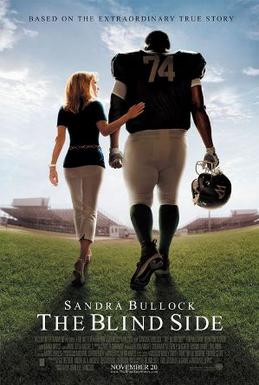
Film Friday: The Blind Side
Fall is a time to watch the boys of the gridiron and this month marks the 5-year anniversary of the theatrical release of The Blind Side. Based on the book by Michael Lewis, the film earned $255 million at the box office as well as a Best Picture Oscar nomination and netted Sandra Bullock an Academy Award for Best Actress. I remember finishing reading the book within a few days of seeing the movie opening night, hoping as all book fans do that the adaptation doesn't botch what was beloved about the original source material. Thankfully, director and screenwriter John Lee Hancock delivered.
In professional football, the game has become more dependent on the quarterback who captains the offense and often throws the ball. In order for the quarterback to get the proper amount of time to throw a pass or determine what he wants to do with the ball, he has to have a strong offensive line, particularly an all-world left tackle to protect his blind side from defensive pressure. Often, the left tackle is the second-highest paid player on the team besides the quarterback. Essentially, they're the QB's insurance policy.
Lewis' book delves into the history of the offensive lineman position and specifically, Michael Oher, a Memphis teen with a troubled childhood who gets taken in by the Tuohy family and discovers a talent for protecting the quarterback's blind side on the high school football team. The book's structure is set up to where the two key threads alternate, so one chapter is on the football specifics, then the next one is on Oher's story. At the time I read the book, I was more into the sports minutiae than the human interest side of the story, but there were moments where I wanted to blaze through the lineman history chapter and get to the next part of Michael's story. The book is well-paced and informative, but may not be the best for readers not interested in the football position details.
That's where the movie comes in, for better or for worse. The explanation of the offensive lineman position is limited to a brief opening sequence, but then focuses exclusively on Oher. Bullock was well-deserving of an Oscar for her role as Leigh Anne Tuohy, who spearheads the effort to take Michael in. The film is firmly rooted in realism (there's a lot of cameos by college coaches, namely current University of Alabama head coach Nick Saban) and the film's final scene is archive footage from the NFL Network of Oher being drafted by the Baltimore Ravens. When I saw the movie with friends who had not read the book, they were able to guess the plot threads correctly, so there are few twists and turns for the average audience. Overall, Bullock's performance elevates what would otherwise be a very ordinary movie. Rating for both the movie and book: 4/5 stars.
When the film was released, Oher was in his debut season with the Ravens. He went on to a 5-year career in Baltimore, winning the Super Bowl in 2012. He currently plays for the Tennessee Titans. Meanwhile, Oher's alma mater, the Ole Miss Rebels, has an outside shot of competing for the national championship as of this writing. They were at one point this season the No. 3-ranked team in the country. The team is coached by Oher's high school coach, Hugh Freeze. The Tuohys have gone on to be featured on television and countless interviews (Leigh Anne is an interior designer, husband Sean owns dozens of restaurant franchises and previously worked as a broadcaster for the Memphis Grizzlies NBA basketball team).
When Oher won the Super Bowl, ABC News did a follow-up piece on the story. If you can't see the video below, click here.
Since the film's release, director John Lee Hancock earned acclaim for directing Saving Mr. Banks, one of my favorite movies of 2013. Sandra Bullock was terrific last year in Gravity and Tim McGraw (Sean Tuohy) will be in next year's sci-fi film Tomorrowland, but actor Quinton Aaron (Michael Oher) and actress Lily Collins (Leigh Anne and Sean's daughter Collins Tuohy) have not had the same level of success post-Blind Side despite receiving acclaim for their roles.
Have you seen or read The Blind Side? What did you think?
Friday, October 17, 2014
Film Friday: The Year in Film So Far
Rather than do a Film Friday review, I thought I'd just take a look at what the film landscape has been like this year and what lies ahead as we get into the good season.
My top 5 films so far are as follows:
1) Guardians of the Galaxy
2) The Lego Movie
3) Captain America: The Winter Soldier
4) Gone Girl
5) X-Men: Days of Future Past
The year has been dominated by the superhero genre, in part because of just how much better Guardians of the Galaxy and the Captain America sequel were than most people expected. The Lego Movie has been the surprise of the year so far. I went into it with minimal expectations and came out loving it. When a movie (or book) surpasses the expectation, I tend to give it a bump in the ratings. Would I give Guardians the Best Picture Oscar over Gone Girl? No. Did it exceed expectations more than Gone Girl did? Absolutely.
But as good as those five films are, we've had an unusually high number of films that were less than stellar. I went with friends to The Expendables 3 expecting nothing and found myself underwhelmed. Amazing Spider-Man 2 and Maleficent were easily the two biggest disappointments of the year. I thought Godzilla was just okay and unintentionally hilarious in some scenes.
Based on the upcoming fall and holiday slate, I fully expect my top 10 to look radically different come January. In terms of other book-based movies, The Fault in Our Stars is in the top 10, but Divergent missed the cut. Frankly, I thought Divergent could have been trimmed, but it was by no means the worst adaptation of the year. That honor belongs to Maleficent. Audiences can tell when a script or book is written scattershot (this summer's Amazing Spider-Man 2 is a textbook example of how not to create a superhero movie — and audiences promptly blasted it online for its shoddy plot). Guardians, Lego and Gone Girl were the total opposite and very well composed. Other factors I look at include the acting, the level of anticipation vs. the payoff and memorable dialogue. In these categories, all five of the top films delivered.
Comparative to last year, I think the quality is down. We had an amazing October last year (Gravity, Captain Phillips and 12 Years a Slave were released in back-to-back-to-back weeks) after a decent summer. Because some films underwhelmed in public opinion this summer, the market feels more down than it probably is. I don't think we're going to get that same kick in quality we got this time last year until late November.
As far as upcoming films go, the schedule is dominated by Christopher Nolan's Interstellar. Arguably the most important movie to come out of Hollywood in years and my No. 1 overall most anticipated of the entire year, the film could allow certain filmmakers to pursue original projects. Audiences like to rip the industry for running out of ideas and at times, that pessimism is warranted (Exhibit A: The Transformers series). If Interstellar is as good as it looks, audiences and the industry as a whole could get a lasting ripple effect of quality, original films that tout ideas and make viewers think rather than cater to the lowest common denominator.
Other films I'm dying to see are Unbroken and Big Hero 6. I'll do a more detailed look at the holiday slate as it gets closer, but now it's your turn: What was your favorite movie this year so far? Is there one you're looking forward to later this year?
My top 5 films so far are as follows:
1) Guardians of the Galaxy
2) The Lego Movie
3) Captain America: The Winter Soldier
4) Gone Girl
5) X-Men: Days of Future Past
The year has been dominated by the superhero genre, in part because of just how much better Guardians of the Galaxy and the Captain America sequel were than most people expected. The Lego Movie has been the surprise of the year so far. I went into it with minimal expectations and came out loving it. When a movie (or book) surpasses the expectation, I tend to give it a bump in the ratings. Would I give Guardians the Best Picture Oscar over Gone Girl? No. Did it exceed expectations more than Gone Girl did? Absolutely.
But as good as those five films are, we've had an unusually high number of films that were less than stellar. I went with friends to The Expendables 3 expecting nothing and found myself underwhelmed. Amazing Spider-Man 2 and Maleficent were easily the two biggest disappointments of the year. I thought Godzilla was just okay and unintentionally hilarious in some scenes.
Based on the upcoming fall and holiday slate, I fully expect my top 10 to look radically different come January. In terms of other book-based movies, The Fault in Our Stars is in the top 10, but Divergent missed the cut. Frankly, I thought Divergent could have been trimmed, but it was by no means the worst adaptation of the year. That honor belongs to Maleficent. Audiences can tell when a script or book is written scattershot (this summer's Amazing Spider-Man 2 is a textbook example of how not to create a superhero movie — and audiences promptly blasted it online for its shoddy plot). Guardians, Lego and Gone Girl were the total opposite and very well composed. Other factors I look at include the acting, the level of anticipation vs. the payoff and memorable dialogue. In these categories, all five of the top films delivered.
As far as upcoming films go, the schedule is dominated by Christopher Nolan's Interstellar. Arguably the most important movie to come out of Hollywood in years and my No. 1 overall most anticipated of the entire year, the film could allow certain filmmakers to pursue original projects. Audiences like to rip the industry for running out of ideas and at times, that pessimism is warranted (Exhibit A: The Transformers series). If Interstellar is as good as it looks, audiences and the industry as a whole could get a lasting ripple effect of quality, original films that tout ideas and make viewers think rather than cater to the lowest common denominator.
Other films I'm dying to see are Unbroken and Big Hero 6. I'll do a more detailed look at the holiday slate as it gets closer, but now it's your turn: What was your favorite movie this year so far? Is there one you're looking forward to later this year?
Friday, October 10, 2014
Film Friday: Gone Girl
Flynn is an excellent writer and wrote with a sense of authority on how the media would cover something like the disappearance of Amy Dunne and the accusations mounting against her husband, Nick. The details are impeccable, down to Rebecca, the crime blogger looking for a career-changing interview and the police detectives. Several of the side characters are genuinely likable, particularly Go and Tanner Bolt, Nick's sister and defense lawyer, respectively. Between the lead characters and Go, she is easily the sanest of the three and has dialogue reflective of what the reader would think or ask during situations.
One of the biggest problems I had with the book was that I never bought the characters truly ever loving each other. All of their interactions seemed to be skin-deep or making some funny and snide comment about a party crowd or society in general. Every married couple I know has some deep connection, whether it be through religion, shared interests, similar lifestyles, etc. I never saw that in Nick and Amy. As the book progressed, my predominant thought usually bounced back and forth between "These two should have never gotten together" and "These guys actually liked each other enough to marry?"
Overall, I thought the book was good, but not the rave that many critics viewed it as when the novel debuted in 2012 (just look on the paperback's back cover for the effusive praise). Again, as was the case with The Fault in Our Stars and The Emerald Mile, perhaps I came in with unrealistic expectations. I'd rate it 2.5/5 stars.
The movie is very well-made, a testament to director David Fincher and Flynn's screenplay. The dialogue is just as sharp as in the book and the characters are a bit more believable, especially the two leads. During the movie, there was never any point when I thought, "That would never happen" or "That's completely not from the book." In other words, the novel's adaptation nipped and tucked at sections of the book, rather than a full-scale amputation of key parts. I thought the movie also tried to make the connection between Amy and Nick pre-marriage stronger. I fully expect the movie to be in the Oscar conversation, especially Rosamund Pike as the missing wife, Fincher as director and for Flynn's screenplay. I do think it can get into the Best Picture race nearly on the strength of Fincher, Affleck and Pike alone, but I doubt it'll take home the trophy. I'd rate it 4/5 stars.
*Be advised, the rest of the review contains spoilers, so consider yourself warned.*
Despite the great twist of Amy framing Nick and her expressing how she would frame him for her disappearance and murder, the novel lost steam for me when Amy was robbed at the backwoods motel. Once that happened, I thought for sure she was going to head back to her husband, but since that happens three-quarters of the way through the book, the rest of it felt like going through the proverbial motions to get to the ending. I did not expect Desi to meet the horrible death of getting his throat sliced that he does (in the movie, it is a very gross and horrible death, whereas the book is less graphic in its description). Frankly, I much preferred the novel's way of handling it and that scene was a detractor for me in the film. Also, Rebecca and Betsy Bolt, Tanner's wife, were cut entirely from the movie. It would have been nice to see Betsy on screen to act as a contrast to Nick and Amy's shattered relationship. However, Tanner's classic line at the end of the book was directly transferred to the screen and got an uproarious laugh during the screening I went to.
Did you read and or see Gone Girl? What did you think?
Friday, October 3, 2014
Film Friday: Rocket Boys/October Sky
I was in sixth grade when my teacher, Mr. Harrison, encouraged our class to go see the film October Sky for credit. My dad, whose love for space exploration started as America leapt into the Space Race, went with me to the film in the spring of 1999. The movie stars a young Jake Gyllenhaal, Chris Cooper and Laura Dern, who I was only familiar with because of her role in Jurassic Park. The film recreated the late 1950's beautifully, thanks in part to director Joe Johnston (he also contributed to the Indiana Jones series and directed two of my other favorite films, The Rocketeer and the first Captain America.)
The movie, at its heart, is about overcoming obstacles and challenges. Homer, played by Gyllenhaal, sees the Soviet satellite Sputnik fly over his mining town of Coalwood, West Virginia and it triggers the spark of an idea that he wanted to build rockets and go into space. Spurred on by his teacher Miss Riley, Homer and a group of other boys set off to build rockets that fly ever higher. Of the other Rocket Boys, Quentin is the most memorable. But as with most lofty goals, there are road blocks along the way, particularly disapproving parents, a town that doesn't understand rocketry, and using materials that have a propensity to explode. Then, there are the successes...
Chris Cooper plays Homer's father wonderfully as a man who isn't a villain, but rather more like the dad in Mary Poppins, a man who doesn't understand why his sons wouldn't want to go into the mines he's loved working in or take up rocketry. Laura Dern is terrific as Miss Riley and the supporting cast is well-rounded. The score by Mark Isham is terrific, using a fair amount of string instruments as an ode to the usual sounds of Appalachia. Overall, a fantastic movie. Rating: 4.5/5 stars.
Fourteen years after watching October Sky for the first time, I picked up the book it was based on, Rocket Boys. It's a shame I didn't read it sooner because as good as the movie is, the book is even better. The memoir delves into events not in the movie (JFK makes an appearance) and creates an even better sense of the time and place. Essentially, the film is about not giving up your dreams while the book is more of a snapshot of a time and place that hardly exists anymore (the Coalwood mine closed in 1986). As a print journalist facing the new world of an exploding online media, I was reminded of what Homer's dad must have been going through seeing the town mine starting to decline and the new possibilities of technology Sputnik represented.
Some of the struggles in the movie are better exemplified in the book. In particular, a teacher refuses to teach Homer a higher math class because the school is only "a football and coal miner's school." Also, in the movie, Homer voluntarily works at the town mine for a period, but in the book, he is brought down to the mine to shadow his dad to learn engineering. As a result, the dad is even less of a villain-like character in the book. In reality, there were six Rocket Boys while in the movie, there were only four. Other side characters, like the newspaper writer who publicizes the boys' launches and some of the other high schoolers, are a delight unique to the memoir. The book is well-written and the attention to detail in recalling the era of the late 50's and early 60's is superb. Of the books I read in 2013, Rocket Boys was my top-rated and with good reason. Rating: 5/5 stars.
And to think it all started as a teacher's credit assignment. Thanks, Mr. Harrison.
Today marks the beginning of the Rocket Boys Festival in Beckley, West Virginia. Beckley is a town of about 17,000 an hour and a half or so northeast of Coalwood. For more details on the festival, click here. For more details on the Rocket Boys and where they are now, click here.
Friday, September 26, 2014
Film Friday: Moneyball
This weekend marks the final games of baseball's regular season, meaning the real season, the playoffs, will begin next week. Powerhouse teams like the New York Yankees and Boston Red Sox will be watching at home with the rest of us while teams that have languished for years without seeing a drop of championship glory are about to end their drought.
Sports teams have searched for years for some formula to repeated success. Some sports like football and hockey have a blueprint while others like baseball do not have any real formula outside of the cliched pitching and defense. Baseball is a sport that has so many arbitrary effects, it's nearly impossible to calculate. Pitchers can have a stellar season then return the next season and not have as good of command or miss the strike zone so much, their earned run average rockets upward (typically, the lower the average, the better the pitcher). Statistics like ERA and the search for a success formula in baseball is the basis for Michael Lewis' Moneyball (W.W. Norton), considered by many to be one of the best sports books ever written.
The book centers on Oakland Athletics general manager Billy Beane, who is consistently saddled with one of the lowest payrolls in baseball, yet manages to field competitive teams in most years. After losing slugger Jason Giambi to the Yankees during the 2001 offseason, Beane resorted to using sabermetric statistics and acquired players that had high on base percentages as opposed to the traditional home runs and runs batted in. As a result, the 2002 A's went on an unlikely run before losing in the playoffs that year.
In 2011, a film version of the book directed by Bennett Miller and starring Brad Pitt, Philip Seymour Hoffman and Jonah Hill made it to the big screen. Like the book, the movie was challenged in making a sports drama without much action and making statistics digestable. Frankly, the movie managed to do it better than the book. When reading the book, I felt it was mechanical at times, and I got lost in the statistics. There were memorable moments like when Billy addresses the scouting department that translated well to the film...
The screenplay, adapted by Steve Zaillian and Aaron Sorkin, a favorite script writer of mine, was very good in terms of getting the key points without being bogged down in the statistics. Pitt, as Beane, and Hoffman, as manager Art Howe, square off like their counterparts did in real life and make for some of the better scenes in the film. Many of the players were profiled in the book, but the only one that really stuck out to me was first baseman Scott Hatteberg, played in the film by Chris Pratt. The book doesn't talk as much about Beane's present personal life, while the film has a whole subplot involving his daughter (mentioned briefly in the book) that was a highlight of the movie. Both the book and film delve into his past as a failed major league prospect.
My favorite scene in both the book and the film was showing how trades in baseball can be made. Sports fans salivate over trade rumors and it was cool to read and see how one goes down. Here's a clip where Beane and Peter Brand, played by Hill, try to get the team's owner to add to the payroll to acquire Ricardo Rincon, a pitcher for the bullpen...
Overall, I'd rate the book a 3/5 stars while the film I rated 5/5 stars and was my pick for Best Picture during the 2011 Oscars. It was nominated for six Academy Awards including the aforementioned Best Picture, Best Actor (Pitt) and Best Adapted Screenplay. Unfortunately, it struck out and went 0/6 in wins. It isn't my favorite baseball movie, but it is certainly in the top 5.
Do you have a favorite baseball or sports movie that was adapted from a book?
Labels:
Aaron Sorkin,
Andrew Clark,
baseball,
Bennett Miller,
Billy Beane,
book review,
book to film adaptation,
bookclark,
Brad Pitt,
Chris Pratt,
Jonah Hill,
major league baseball,
Michael Lewis,
Moneyball,
Oakland Athletics,
Philip Seymour Hoffman,
sabermetrics,
W.W. Norton
Wednesday, September 24, 2014
To Kill a Mockingbird Banned?
This week is Banned Books Week, which spotlights novels and literature that people have deemed unfit, primarily in the public school system. When most people think of a banned book, they think of something like James Joyce's Ulysses because of its historical significance. However, a quick review of books most sought to be banned includes the Harry Potter series, Catcher in the Rye, The Great Gatsby, Lord of the Flies, A Wrinkle in Time, The Diary of Anne Frank, The Lord of the Rings, and To Kill a Mockingbird. There are dozens upon dozens of books that have come under a ban scrutiny, but I mention these specifically because I read them all in high school or at an earlier age.
Two years ago, Marshall University mapped out reasons why 'Mockingbird' was challenged in schools across the country in recent years, mostly due to racist language and part of the plot that involves an alleged rape of a white female by a black man. When it comes to the language, I liken it to some degree to Disney banning their 1946 film "Song of the South" from the home video market. My generation knows the song "Zip-a-Dee-Doo-Dah" and characters of the film from the Splash Mountain water ride at Disney theme parks around the world, but we've never seen it. Maybe a clip or two at best. To be fair, many critics of the film blasted it for more than the language, namely the stereotyping of African-Americans. I detest the use of the n-word and it is horrific, but it was an accepted societal norm for the time. We should be able to explain or understand that words or expressions used back then are no longer accepted by society in general.
The 1962 film version of 'Mockingbird' is excellent as well, despite the sets obviously being on the Universal backlot in California. (When we viewed it in my freshman English class, my teacher liked to point out an early shot in the film that pans down to the Finch home and you can clearly see large mountains in the background that would be out of place in Alabama). As with most people who've seen the movie, I raved about Gregory Peck's Oscar-winning performance as Atticus Finch after I saw it, especially in regards to the final courtroom scene when he implores jurors not to convict his client, a black man accused of raping a white woman...
The scene is a landmark in cinema and has inspired many to get into the legal profession, but we wouldn't have had the scene without Lee's classic novel. It is my belief that because so many schools feature 'Mockingbird' in their curriculum, generations will now see the revolting ugliness of racism and seek changes for the better. Several of the books that people sought to ban like 'Catcher' and 'Mice and Men' I don't care for personally, but I would never seek a ban.
Is there a book that has been challenged to be banned that you've read and liked?
Monday, September 22, 2014
Award and Film Roundup
The longlists for the National Book Award in fiction, nonfiction, young adult and poetry were announced along with the shortlist for the Flaherty-Dunnan First Novel Prize. In years' past, I've been more interested in the nonfiction picks, but this year, the fiction list is full of books I would read, led by Anthony Doerr's All the Light We Cannot See and John Darnielle's Wolf in White Van. Richard Powers' Orfeo managed to get on the longlist for both the National Book Award and the Man Booker Prize. On the nonfiction side, Ronald Rosbottom's When Paris Went Dark and Walter Isaacson's The Innovators stood out. For a look at the longlists, click here.As for the Flaherty-Dunnan Prize, which honors excellence in fiction from a first-time writer, there are several books that caught my eye. Smith Henderson's Fourth of July Creek currently sits on my desk waiting to be read while Rene Denfeld's The Enchanted is on my to-be-read list. Tiphanie Yanique's Land of Love and Drowning and Matthew Thomas' We Are Not Ourselves, both of which received a lot of buzz earlier this year, also made the cut. I've heard a lot of good reviews for Yanique's novel. To see all the nominees, click here.
Meanwhile, there have been a flurry of film news stories. John Green adaptations are the rage right now in Hollywood after the success of The Fault in Our Stars. 20th Century Fox announced a reshuffling of its summer 2015 film slate, which included bumping Paper Towns up from July 31 to June 19, a sign of confidence from the studio. Also last week, Variety reported model Cara Delevingne won the lead role of Margo. In related news, Universal landed the film rights to Green's Let it Snow, a book of short stories set on Christmas Eve. Green co-authored the book with Maureen Johnson and Lauren Myracle.
Fox also greenlit the sequel to The Maze Runner, The Scorch Trials, and set a Sept. 18, 2015 release date after the first film took the top spot at the box office with $32.5 million. Not a bad start at all. The other book adaptations that debuted this weekend, A Walk Among the Tombstones and This is Where I Leave You, did not fare as well given the relatively soft market right now.
Channing Tatum is set to produce a film version of Jason Padgett's memoir, Struck by Genius, which came out earlier this year. The film will be distributed by Sony. The story is of a man who suffers a brain injury but becomes a mathematical genius. More details here.
Deadline had a series of big scoops this past week. First up, Ang Lee will direct an adaptation of Billy Lynn's Long Halftime Walk for TriStar as his next film. Based on Ben Fountain's 2012 novel, the story involves an army platoon at a Thanksgiving football game as part of a PR tour after a harrowing battle in Iraq. Lee wasn't the first name that came to my mind for this book, but he is an excellent director.
Second, Harlan Coben fans may finally see a book adaptation on the big screen. Deadline claims Universal is courting Liam Neeson, who is currently starring in A Walk Among the Tombstones, to take the lead role in Tell No One. Third, I mentioned in an article earlier this month claiming Kristen Wiig and Jessica Chastain were in talks for a role in Ridley Scott's adaptation of The Martian. Apparently, Kate Mara was offered a role in it as well.
Fourth, it looks like Tom Hanks has set his sights on his next HBO miniseries project. After the success of producing From the Earth to the Moon, Band of Brothers, John Adams and The Pacific, Hanks secured the rights to Factory Man, the Beth Macy book chronicling the Bassett (of Bassett furniture fame) family's fight against outsourcing. On a related note, Hanks is also producing the World War II adaptation of Donald Miller's Masters of the Air for HBO.
Disney's film version of Michael J. Tougias' book The Finest Hours added Ben Foster to the cast, joining Chris Pine (Star Trek) and Casey Affleck (The Ocean's Eleven trilogy). The book tells the story of Coast Guard efforts to rescue the crews of two oil tankers wrecked by a nor'easter storm. The film is slated for release next fall and is a project I'm really looking forward to. More details from Variety here.
Labels:
Andrew Clark,
Ang Lee,
Billy Lynn's Long Halftime Walk,
book to film adaptation,
bookclark,
Channing Tatum,
Factory Man,
Flaherty-Dunnan Prize,
HBO,
John Green,
National Book Award,
Paper Towns,
The Finest Hours,
The Martian,
The Maze Runner,
Tom Hanks
Friday, September 19, 2014
Film Friday: The Last Gunfight and Tombstone
Last month, I wanted to read some books that took place in the Grand Canyon State. Most of my extended family is there, I was born there and it still holds a special place in my heart. From the red canyons of Sedona to the Mogollon Rim to serene Oak Creek Canyon and the magnificent Grand Canyon itself, Arizona has such beautiful scenery despite being a desert state.
Since so much of the state's history and lore involves the Old West and the romanticized images of gunslinging cowboys, I read Jeff Guinn's The Last Gunfight (Simon & Schuster) and thoroughly enjoyed his history of the gunfight at the O.K. Corral. Guinn explains how the town of Tombstone came to be, what drew people to it, and the political infighting between the town's residents that led to the gunfight. According to Guinn, Wyatt Earp was very similar to his father in that he wanted to be known for something, he craved recognition and fame. Guinn explained the political battle of wills that occurred between Johnny Behan, the slimy sheriff who often sided with the cowboys' illegal activity, and the Earps, most notably Wyatt. There was also a battle between the town's two newspapers and the residents were quickly drawing sides between the Earps and the cowboys.
In the last chapter, after explaining the Vendetta Ride after the gunfight, Guinn explained how the gunfight at Tombstone became the legendary gunfight it became known as, mostly through 1930's-era books and the 1957 film Gunfight at the O.K. Corral. Guinn's The Last Gunfight was an entertaining and surprisingly fast read that was also enlightening. Rating: 4/5 stars
A couple of years ago, a roommate of mine said one of his favorite movies was Tombstone, the 1993 film depicting the gunfight and its aftermath. I watched it on a whim and I thoroughly enjoyed it. The film stars Kurt Russell, Val Kilmer, Bill Paxton and Sam Elliott as the Earp brothers and Doc Holliday. There are a ton of other actors in this movie that have become more famous over time. A young Jason Priestley and Thomas Haden Church are both in this movie, as well as more established stars and character actors like Dana Delaney, Powers Boothe and Stephen Lang (the latter two are especially known for villainous roles - Boothe was most recently in the Sin City sequel as a bad guy and Lang is better known as the malicious military colonel in Avatar.)
Tombstone has its moments of camp, but it has some of the best one-liners of any film, especially from Kilmer's Doc Holliday, arguably the star of the movie. Lines like "looks like somebody just walked over your grave," "I've got two guns, one for each of you," and "I'm your huckleberry" are instantly quotable. Russell also delivers his fair share of great lines as well. The cast gives solid performances and the cinematography is good, but there are some moments that are obvious 20th century thinking out of 19th century characters. Were it not for the fact that the filmmakers stressed accuracy in their story, I would be more willing to overlook it. There are some moments that left me thinking "Would someone really say that in the 1880's?" A slight nitpick here, but the music can be a bit overkill at times. Overall, I'd grade Tombstone a very solid B. It's a fun movie to watch and I own it on Blu-ray if that's any indication.
As for differences between history, the book and the film, I'll simply say the film gets the essence of the gunfight, but does leave out a lot of details and tweaks Earp's real life a bit. There is no indication in the film of the political or social undertones between the Earps and the cowboys. The film sets up the gunfight a bit differently than what actually happened. The essence of the characters is mostly true to history, especially Behan.
Have you seen Tombstone or read The Last Gunfight? What did you think?
Friday, September 12, 2014
Film Friday: The Fault in Our Stars
Author's Note: Due to the release of The Fault in Our Stars on DVD/Blu-ray and download on Tuesday, Sept. 16, I'm combining the book and film reviews.
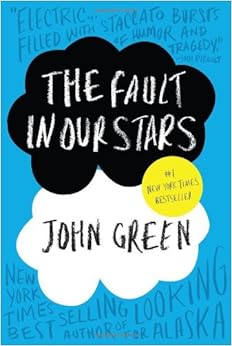
Spoilers are like vampires, they suck the anticipation right out of a book or film or television show. In the literary world, I hadn't had a spoiler happen in ages until I was about to read John Green's The Fault in Our Stars (Dutton/Penguin). I was trying to squeeze in reading the book before the film came out earlier this summer and I wanted to get a sense if this young adult book was attracting readers who don't normally read YA books, like The Hunger Games did in recent years. After scouring Goodreads and YouTube, the answer was a definitive "yes." One YouTuber, however, opted to talk about the book's ending and thus, spoiled the novel in what was the worst spoiler I've had since Cedric Diggory's death in Harry Potter and the Goblet of Fire.
The book itself is wonderful in telling the story of Hazel Grace Lancaster and Augustus Waters, two Indianapolis teens diagnosed with different forms of cancer who fall in love. The book plays off of the usual cancer-related groups (cancer support groups, the "Genies" being a stand in for the Make-a-Wish Foundation, cancer drug trials, etc.) in a way that grounds the book and gives off the impression that this could actually happen. Both Hazel and Augustus are written well. They're not doe-eyed innocent creatures who suddenly realize how messed up the world is, but they're also not the most mature teens ever seen. They still do stupid teenager things and have their moments of teenage pretentiousness.
Despite the witty writing, the book hinges on the twist that sets up the ending and frankly, even if I hadn't had the ending spoiled for me, I probably would have still guessed the outcome. The book tries to push one possibility so hard, one begins to suspect the opposite will happen, which it in fact does. I probably would have rated it a bit higher, but because of the spoil, I'll give the book a 3.5/5 stars rating.
When the movie came out, my publication's entertainment writer knew I was an avid reader and asked if I had read the book. I said yes, only for her to ask if I could write something up that compares the book and film. I went to a late Friday showing and as the ticket-taker at the theater glanced at me and my ticket, she stifled a laugh. I braced myself for a chick-flick bonanza with screaming teenagers in the audience, but luckily the movie was not like that.
Shailene Woodley and Ansel Elgort play the film versions of Hazel and Augustus with a terrific supporting cast led by Laura Dern and Willem Dafoe. The Amsterdam sequences were great in the book but were better in the film, especially Dafoe's crusty portrayal of Peter Van Houten, a secluded bestselling author who has succumbed to his demons. Well-directed by Josh Boone, the film adaptation does the book justice and was one of the better films I saw this summer. Both in reading the book and watching the movie, I was constantly reminded of 2007's "Juno," a story that deals with quirky teens handling an adult issue in a Midwestern town, complete with an alternative-pop soundtrack. Personally, I like Juno a bit better. I would save future viewings for a date night, but "Fault" earned a solid B rating.
If you saw the movie or read the book, what did you think?
Spoilers are like vampires, they suck the anticipation right out of a book or film or television show. In the literary world, I hadn't had a spoiler happen in ages until I was about to read John Green's The Fault in Our Stars (Dutton/Penguin). I was trying to squeeze in reading the book before the film came out earlier this summer and I wanted to get a sense if this young adult book was attracting readers who don't normally read YA books, like The Hunger Games did in recent years. After scouring Goodreads and YouTube, the answer was a definitive "yes." One YouTuber, however, opted to talk about the book's ending and thus, spoiled the novel in what was the worst spoiler I've had since Cedric Diggory's death in Harry Potter and the Goblet of Fire.
The book itself is wonderful in telling the story of Hazel Grace Lancaster and Augustus Waters, two Indianapolis teens diagnosed with different forms of cancer who fall in love. The book plays off of the usual cancer-related groups (cancer support groups, the "Genies" being a stand in for the Make-a-Wish Foundation, cancer drug trials, etc.) in a way that grounds the book and gives off the impression that this could actually happen. Both Hazel and Augustus are written well. They're not doe-eyed innocent creatures who suddenly realize how messed up the world is, but they're also not the most mature teens ever seen. They still do stupid teenager things and have their moments of teenage pretentiousness.
Despite the witty writing, the book hinges on the twist that sets up the ending and frankly, even if I hadn't had the ending spoiled for me, I probably would have still guessed the outcome. The book tries to push one possibility so hard, one begins to suspect the opposite will happen, which it in fact does. I probably would have rated it a bit higher, but because of the spoil, I'll give the book a 3.5/5 stars rating.
When the movie came out, my publication's entertainment writer knew I was an avid reader and asked if I had read the book. I said yes, only for her to ask if I could write something up that compares the book and film. I went to a late Friday showing and as the ticket-taker at the theater glanced at me and my ticket, she stifled a laugh. I braced myself for a chick-flick bonanza with screaming teenagers in the audience, but luckily the movie was not like that.
Shailene Woodley and Ansel Elgort play the film versions of Hazel and Augustus with a terrific supporting cast led by Laura Dern and Willem Dafoe. The Amsterdam sequences were great in the book but were better in the film, especially Dafoe's crusty portrayal of Peter Van Houten, a secluded bestselling author who has succumbed to his demons. Well-directed by Josh Boone, the film adaptation does the book justice and was one of the better films I saw this summer. Both in reading the book and watching the movie, I was constantly reminded of 2007's "Juno," a story that deals with quirky teens handling an adult issue in a Midwestern town, complete with an alternative-pop soundtrack. Personally, I like Juno a bit better. I would save future viewings for a date night, but "Fault" earned a solid B rating.
Subscribe to:
Posts (Atom)