Showing posts with label fiction. Show all posts

Monday, February 2, 2015

Audiobook Review: The Girl on the Train

The Girl on the Train (2015)
Written by Paula Hawkins
Narrated by Clare Corbett, Louise Brealey and India Fisher
Run Time: 10 hours 59 minutes
Publisher: Penguin Audio/Riverhead

Occasionally, I take the commuter train to downtown Los Angeles' iconic Union Station for certain work items. Along the way, I often gaze out the window, only to see the back of industrial buildings and districts. It was with this frame of reference that I gravitated toward the first big bestseller of 2015, Paula Hawkins' highly anticipated debut The Girl on the Train.

Take a mystery, add Hitchcock voyeurism, British flair and a dash of Gone Girl to make a gripping thriller. Rachel the title character, has been battling alcoholism and coming to terms with a divorce. During her commute, she sees her idea of a perfect couple on a house balcony and imagines their lives. On an average day, she sees the wife is not there and an investigation ensues. Anna is the wife of Rachel's ex-husband and despises Rachel for her various afflictions. The third narrator is Megan, the wife that has gone missing.

The book is unmistakably British and it's all the better for it. I read some early reviews that complained about the use of British slang like "petrol" and "bonnet," but for me, it made me like the novel even more. I like books that give a real sense of time and place and this novel does that in spades.

The Girl on the Train's voyeuristic tones trace directly to Alfred Hitchcock. Most people think of his style in the form of the infamous shower scene in Psycho, but a better example is that film's opening sequence. After the opening credits and the famous Bernard Hermann score, the camera pans across the Phoenix cityscape and glides through the window of an open office building to where the action begins to unfold. I kept thinking back to that whenever Rachel described what she was seeing outside the train.

Understandably, the book has been compared to Gone Girl, which it does have some similarities. Both feature marriage troubles and a desperate housewife, but the likeliness pretty much ends there.

Overall, I liked The Girl on the Train despite it having characters I didn't root for. It's hard watching characters make the wrong choices over and over again, but I was genuinely surprised at the ending. One of the narrators desperately tries to right the ship and solves the case in a way that I didn't see coming and when I looked back on it, the plot made perfect sense. It wasn't just a plot twist for the sake of having a twist. Hawkins constructed a realistic, detailed world and trusts her audience, while managing to stay one step ahead.

Grade: 4/5 stars. It's a dark thriller, but it wasn't as bleak or jaded as some other books in the genre like Gone Girl, which made it more palpable for me. The audio narration was superb, with each character clearly defined and the book breezed right by like a commuter train. If you like the genre, pick this one up and enjoy the ride.

As one may expect, a film version is in the works. Per the latest news, a script is due to be turned in soon.

Friday, November 28, 2014

Film Friday: Mockingjay (Part 1)

NOTE: The conclusion of a three-part series. For part one, discussing the original Hunger Games, click here. For part two, about Catching Fire, click here.

After the cliffhanger ending of Catching Fire, Mockingjay picks the story right up and shows Katniss Everdeen unsure of herself as she takes the mantle of the titular bird and becomes the face of the rebellion against Panem. Meanwhile, Peeta and Johanna are held captive in the Capitol, leading Katniss to demand the rebels of District 13 rescue her fellow games participants. Eventually, there is a full-on assault on the Capitol.

One of my few issues with the book was that Katniss seemed to take a step back in her journey toward being the face of the rebellion, as if she was suddenly unsure of herself. While some hesitancy is expected, I thought author Suzanne Collins overplayed her hand on that aspect. If my town was firebombed out of existence by its own government, I'd be beyond furious and wanting to take action. However, when the assault on the Capitol begins, it's a thrilling page-turner from the word go.

One of the book's strengths is the skewering of creating propaganda for a war. District 13 and the Capitol are both trying to rally support, propaganda pieces, or "propos" as they are called in the book, each side is using people to sell the cause, some better than others. Let's just say Katniss isn't a natural in a studio reading prepared scripts. 

I think of The Hunger Games series like dual sliding scales. On the first scale, the survivalist and hunting themes in the original novel are a major presence, but by the time the reader gets to Mockingjay, they have diminished. Conversely, the second scale is the political and social commentary, which is noticeable in the first book but dominates the third.

Grade: 4/5 stars. Despite a couple of missteps, The Hunger Games saga has a generally satisfying ending.


As for the film, my dislike for singular books being split into multiple parts has been documented. Also, Mockingjay Part 1 was coming off my favorite book and film in the series, so it was already behind the proverbial 8-ball. Having said that, the film makes the most of being prematurely split into two. The end scene isn't quite where I thought it was (though it came really close and the screen goes black at where I had guessed it would end).

Jennifer Lawrence (Katniss), Woody Harrelson (Haymitch) and Elizabeth Banks (Effie) make the best of the material while Julianne Moore (Coin) came off as a bit of a stiff, but one could argue her character is in the book as well. Yes, Effie subs in for Katniss' prep team in the book and is in District 13 in the film. This was a change I totally expected in part because fans and viewers who have not read the books would have been asking throughout Part 1, "Where's Effie?" They probably could have been true to the text had the film not been split into two.


The other major change in the film is the rescue. In the book, Katniss' first-person perspective does not allow us as a reader to see it and we are instead in Katniss' head where she frets about the possibilities. So it was a welcome change when the camera goes along with the rescuers and we see it unfold. Chalk that up to the camera being a third-person POV.

There is another potentially huge change involving Katniss' deal of becoming the Mockingjay of the rebellion, but it depends on how things unfold in Part 2.

Grade: 3.5/5 stars. Is the film good? Yes. Should it have been split into two? Probably not. 

Friday, November 21, 2014

Film Friday: Catching Fire

NOTE: The second in a three-part series leading up to Mockingjay, Part 1. To see the one on the original novel, The Hunger Games, click here.

I rarely watch television and when I do, I actively avoid reality shows. So it wouldn't surprise you when I say I dislike Survivor, especially its All-Star editions. The same idea is behind part 2 of The Hunger Games trilogy, Catching Fire.

Katniss and Peeta thought they had escaped the clutches of the Capitol for good. But when the 75th Hunger Games (also referred to as the Quarter Quell) rolls around a year after the events in the first novel, they are back in with other victors from previous editions of the Games. Meanwhile, unrest continues in the districts as Katniss and Peeta's act of defiance at the end of the first Hunger Games sparked talk of a revolution.

Of the books in the series, Catching Fire is my favorite. The spectacle of the arena continues to be peeled away for the grotesque and macabre rampage that it is and the political subtext that started in the original becomes more apparent. Peeta is elevated from being the damsel in distress and Katniss rounds into form as the take-no-prisoners heroine the reader knows she will eventually become. The book also has one of the better cliffhanger endings of any book I've read in recent years and showed a willingness on author Suzanne Collins' part to shake up the formula her books had held to up to that point.

A lot of people like the side characters in the original novel, namely Rue and Prim, but I like the supporting characters in Catching Fire better. Each of the previous victors that are being forced to return to the Games rebel against the Capitol in their own unique way, from Beetee's knowledge of electricity to Finnick's inner rage at what happened to his sweetheart Annie. There are major consequences to side characters we've known since the original novel, so the stakes are raised more than they ever were in The Hunger Games.

One caveat on Catching Fire is the audiobook version. I briefly flirted with trying to listen to audiobooks last year and the first one I tried was Catching Fire. I made it about two hours in before I couldn't take it any more. Katniss came across as a whiny heroine that didn't have a backbone.

When the first Hunger Games film made $152 million in its opening weekend, still the highest-ever for a non-sequel, a green light for Catching Fire was a foregone conclusion. The studio swapped director Gary Ross for Francis Lawrence (no relation to series star Jennifer) in order to make a November 2013 release date. Some were concerned because Francis' most notable film up to that point was I Am Legend, the Will Smith zombie action film. The worries turned out to be for nothing.

Catching Fire managed to improve on the original in every aspect. Less shaky cam, better character development, and with some minor exceptions it stayed true to the text. The movie is second only to Silver Linings Playbook on my "best Jennifer Lawrence performance" list. She managed to show Katniss' growing confidence in her role as the eventual Mockingjay well.

Like the first movie, my favorite scene has Stanley Tucci's Caesar Flickerman in it. Main characters Katniss and Peeta pull a surprise on the capitol that leaves the audience upset at Caesar. Again, as was the case in The Hunger Games, the book's more political subtexts really stood out here.


The movie is intense and managed to leave the cliffhanger from the novel intact. When I saw the film with my sister and brother-in-law, I could hear him saying something to the effect of, "Oh man, they're going to cut it on that last shot" while I said "Just like the book." Below is the last scene, in its entirety, that set up the countdown clock to this weekend's Mockingjay Part 1.


Catching Fire managed to raise the stakes, change up the world of The Hunger Games and was a page turner from beginning to end.

Grade for the book: 4.5/5 stars
Grade for the movie: 4/5 stars

What did you think of Catching Fire?

Friday, November 14, 2014

Film Friday: The Hunger Games

NOTE: Part 1 in a three-part series leading up to Mockingjay, Part 1.

"But it's kids killing kids."

That's what friends and co-workers would say whenever I mentioned Suzanne Collins' novel The Hunger Games. The story of a heroine in a post-apocalyptic North America taking part in a gladiatorial game to the death is a hard sell to people unaware of the novel's first half. Supposedly, the novel was conceived by Collins after flipping through television channels and seeing a reality television show then footage from the Iraq war. With that in mind, the novel's first half is the best part because it's able to set the tone for the unsettling action to follow. The early scenes of The Reaping, where main character Katniss Everdeen volunteers to take the place of her much younger sister Prim in the games, and the pomp and circumstance surrounding the state-sanctioned games are all a bit unnerving in that it isn't all that far off from reality.

My favorite scene in both the book and the subsequent film has nothing to do with the games or the arena. It's when the contestants, or "tributes" as they are called, are interviewed by television hose Caesar Flickerman. The crowds adore the tributes, yet everyone knows those same contestants are heading into certain death...and the crowds are entertained (cue Gladiator's Maximus "Are you not entertained?) There's jabs at high society, all adorned in ridiculously over-the-top fashions, wagering over who will survive the games The dark satire, practically embodied by the oft-quoted "May the odds be ever in your favor," plus elements of class warfare, poverty, and government oppression elevate the series above its YA post-apocalyptic brethren.

My one complaint in the book is the graphic descriptions of some of the tributes' deaths once the games begin. There were whole pages that I was like "Yeesh, that's a gruesome way to go," followed by me quickly turning the page. However, despite those few pages, the book has something to say about modern culture that rises above the gladiatorial fray. It's worth a read. Rating: 3.5/5 stars.

When The Hunger Games film debuted in March 2012, the fate of a studio was riding on it. Lionsgate was fending off a takeover attempt by activist shareholder Carl Icahn and the studio plunked down $78 million to make the film. They hired director Gary Ross, who I enjoyed previously from when he directed Seabiscuit (but he's also known for directing Pleasantville), and Collins herself helped write the script.

The film made Jennifer Lawrence, who was already an ascending star via Winter's Bone and X-Men: First Class, a household name. But the movie's strength is in its supporting cast, namely Stanley Tucci as Flickerman, Woody Harrelson as Haymitch Abernathy and Donald Sutherland as the villainous President Snow. Tucci is outstanding as Flickerman and really drives home the satire of the reality television show that is the games. Harrelson is likeable as Katniss' drunk mentor and Sutherland has arguably the best line in the movie when he speaks about containing the spark of hope against an oppressive regime. Below is the scene where Katniss is interviewed by Flickerman...


Thankfully, the book's more poignant points don't get diluted in the jump to celluloid, though some minor side characters are left out. The biggest example is Madge, the daughter of the mayor of District 12, who gives the famous mockingjay pin to Katniss (in the movie, Katniss gives it to her sister Prim, who then returns it to Katniss). Also, I thought the movie gave more of a sense of place, since you can very easily tell the filmmakers shot in North Carolina and Appalachia, where District 12 is said to be in the novel. The movie handles the violence better than the book, mostly through the use of shaky cam and quick cuts so as to keep a PG-13 rating. As a result, I usually tell people interested in the movie but concerned about the violence to see the movie rather than read the book. This is one of the few properties that breaks my rule of "book first, then movie." Rating: 4/5 stars

And it's more than just "kids killing kids."

Have you seen The Hunger Games? Are you excited for Mockingjay Part 1?

Monday, October 13, 2014

Book Review: Ready Player One

A book that has taken the reviewer community by storm in recent years is Ernest Cline's Ready Player One, a hybrid of "The Matrix," "Tron" and "Willy Wonka." The story involves a Midwestern teenager who spends his days in a virtual reality world called the OASIS because the real one has succumbed to catastrophe. He hopes for a better future by participating in the OASIS treasure hunt, created by the its deceased creator. After stumbling onto the first clue, it's a race against time, corporate interests and other players to find the treasure.

The primary characters are teens, but calling the novel another dystopian YA book would be selling it short because of its timely themes. People around the world want to escape into a virtual reality whether it be the Internet or the novel's OASIS. We create online profiles of ourselves, promoting our best qualities and doing our best to hide the less-than-good ones. There's also a running plot about a nefarious corporation trying to control the OASIS and given the ongoing furor of net neutrality, the timing is perfect. Cline delves into these ideas and wraps them in a fun action-adventure package rife with 1980's and early video game references. As someone who was born in the late 80's, I got most of the references, but some flew over my head. The plot and the worlds were very well-constructed and with a minor exception or two, there wasn't anything that seemed out of place or not cohesive with the overall storyline. There's also a romance subplot that serves the story well, but doesn't feel shoehorned in for the sake of having a love story. As a result, the book is accessible to a much wider audience.

Ready Player One is one of the better fiction books I've read in a while and is the best I've read this year. Grab a copy and enjoy the ride. Rating: 4/5 stars

As one may expect, a film version is in the works. Cline sold the rights to producer Don De Line and Warner Bros. after a fierce bidding war that included at least five studios and production companies. De Line worked on films like "The Italian Job," "Green Lantern" and "Pain and Gain." Cline wrote the first draft of the screenplay, but Zak Penn was commissioned to rewrite the script this summer and get it closer to a point where the studio can start hiring a director and begin production, according to Hollywood blog The Wrap. Warners' 2015 and early 2016 slate is mostly booked and considering the many effects that would be involved in recreating the OASIS, I can't imagine the movie version to come out any earlier than late 2016 or 2017.

Friday, September 12, 2014

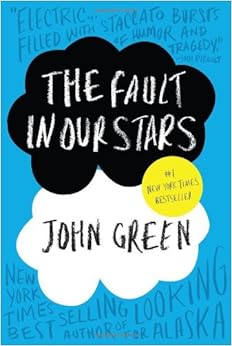
Film Friday: The Fault in Our Stars

Author's Note: Due to the release of The Fault in Our Stars on DVD/Blu-ray and download on Tuesday, Sept. 16, I'm combining the book and film reviews.

Spoilers are like vampires, they suck the anticipation right out of a book or film or television show. In the literary world, I hadn't had a spoiler happen in ages until I was about to read John Green's The Fault in Our Stars (Dutton/Penguin). I was trying to squeeze in reading the book before the film came out earlier this summer and I wanted to get a sense if this young adult book was attracting readers who don't normally read YA books, like The Hunger Games did in recent years. After scouring Goodreads and YouTube, the answer was a definitive "yes." One YouTuber, however, opted to talk about the book's ending and thus, spoiled the novel in what was the worst spoiler I've had since Cedric Diggory's death in Harry Potter and the Goblet of Fire.

The book itself is wonderful in telling the story of Hazel Grace Lancaster and Augustus Waters, two Indianapolis teens diagnosed with different forms of cancer who fall in love. The book plays off of the usual cancer-related groups (cancer support groups, the "Genies" being a stand in for the Make-a-Wish Foundation, cancer drug trials, etc.) in a way that grounds the book and gives off the impression that this could actually happen. Both Hazel and Augustus are written well. They're not doe-eyed innocent creatures who suddenly realize how messed up the world is, but they're also not the most mature teens ever seen. They still do stupid teenager things and have their moments of teenage pretentiousness.

Despite the witty writing, the book hinges on the twist that sets up the ending and frankly, even if I hadn't had the ending spoiled for me, I probably would have still guessed the outcome. The book tries to push one possibility so hard, one begins to suspect the opposite will happen, which it in fact does. I probably would have rated it a bit higher, but because of the spoil, I'll give the book a 3.5/5 stars rating.

When the movie came out, my publication's entertainment writer knew I was an avid reader and asked if I had read the book. I said yes, only for her to ask if I could write something up that compares the book and film. I went to a late Friday showing and as the ticket-taker at the theater glanced at me and my ticket, she stifled a laugh. I braced myself for a chick-flick bonanza with screaming teenagers in the audience, but luckily the movie was not like that.

Shailene Woodley and Ansel Elgort play the film versions of Hazel and Augustus with a terrific supporting cast led by Laura Dern and Willem Dafoe. The Amsterdam sequences were great in the book but were better in the film, especially Dafoe's crusty portrayal of Peter Van Houten, a secluded bestselling author who has succumbed to his demons. Well-directed by Josh Boone, the film adaptation does the book justice and was one of the better films I saw this summer. Both in reading the book and watching the movie, I was constantly reminded of 2007's "Juno," a story that deals with quirky teens handling an adult issue in a Midwestern town, complete with an alternative-pop soundtrack. Personally, I like Juno a bit better. I would save future viewings for a date night, but "Fault" earned a solid B rating.
If you saw the movie or read the book, what did you think?

Tuesday, September 2, 2014

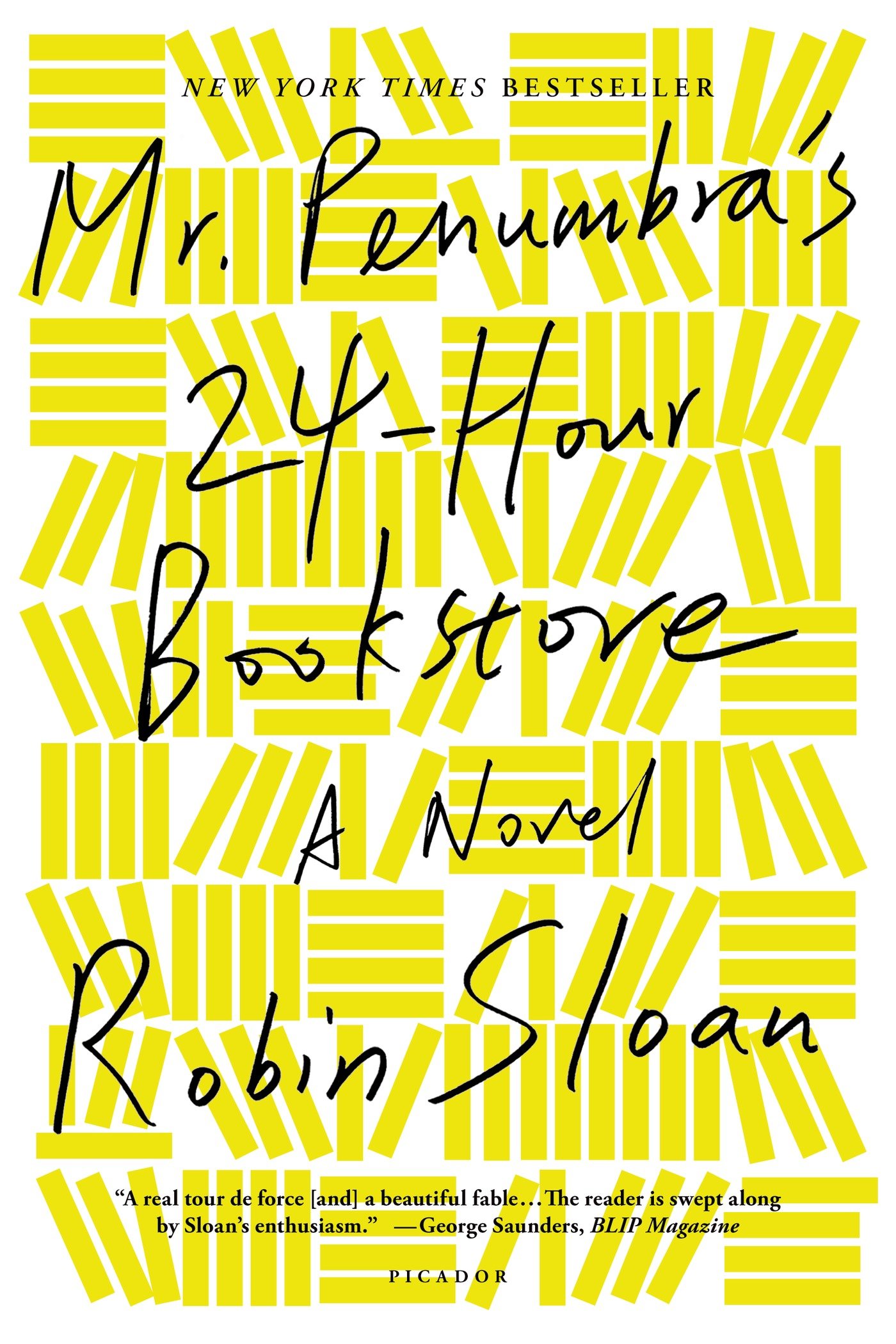
Review: Mr. Penumbra's 24-Hour Bookstore

Some books just sneak up on you, and for me, Mr. Penumbra's 24-Hour Bookstore, by Robin Sloan (FSG), was no exception. I had seen a lot of buzz on Goodreads about the book and managed to squeeze it in last month.

The book opens with Clay Jannon, a laid-off Web designer in San Francisco that gets a job as the overnight clerk at the eponymous bookstore.As he works there, he realizes the strange store has plenty of secrets. Along the way, he meets a gal who works at Google and are more in tune with modern technology than the bookstore or its patrons. While that premise may seem a bit short, the second half of the book is best kept unspoiled. Let's just say the book takes an unusual turn or two before it wraps up.

If I had to sum up the book in a word, it's quirky, and I don't mean that in a bad way. The Google designer character is a product of her time (apparently, the company will be able to solve all our problems), Clay's roommates are memorable in their brief moments, and Mr. Penumbra for some reason reminded me of a sort of literary Mr. Miyagi. A character towards the end that sort of acts as the story's villain reminded me of a few people I know in real life that detest modern technology. The usage of San Francisco as the setting works well and you can tell Sloan is familiar with the city and manages to weave in Industrial Light and Magic, Google's hometown of Mountain View, along with some landmarks and other Bay Area icons. There was a sense of authority during the sequences at Google, as though Sloan was using his own personal experience as a template. There are moments where the book seems to go off in a strange direction, but when the last page is read, it all ties together and makes a wonderfully cohesive plot.

In a summer that had few "light reading" books, Penumbra was a pleasant surprise. It still manages to pose big ideas about technology, the pending death of print publications, and how generations interact over technology while providing an entertaining story.

Rating: 4/5 stars

One bonus tidbit: If you buy the hardcover or paperback versions, expect the cover to glow in the dark. The first night I had it on my nightstand, I was trying to figure out what was glowing until I realized it was the book.

Monday, September 1, 2014

What I'm Reading This Month

As summer breathes its last gasp and the calendar turns to September, a new month of reading begins. When I read, I typically do two books a month that have some sort of shared theme or topic. For example, I focused on my birth state of Arizona last month by reading Kevin Fedarko's The Emerald Mile and Jeff Guinn's The Last Gunfight. Mile tells the story of a Grand Canyon river guide who uses a torrential runoff to slingshot his boat into the record books. Gunfight tries to discern myth from fact in a retelling of what really happened at the Gunfight at the O.K. Corral, most recently popularized in the 1993 film Tombstone. Because I finished a bit early, I managed to slip Robin Sloan's Mr. Penumbra's 24-Hour Bookstore under the wire as a free choice before the month's end.

This month, the theme is, more or less, bestseller fiction, starting with Gillian Flynn's mega bestseller Gone Girl from Crown. A wife goes missing and all signs point to the husband as the prime suspect. As he is scrutinized from nearly every angle, investigators realize this marriage was less than happy. I normally don't read books as dark as Gone Girl, but I'm anticipating the upcoming film version, set for release on October 3. I loved director David Fincher's work in "The Social Network" and "The Curious Case of Benjamin Button" and the cast for Gone Girl is stellar. The film, as with most fall releases, has Oscar buzz around it.


Later this month, I'll be delving into the world of Ready Player One by Ernest Cline, also from Crown. Set in a dystopian future, the book follows a man desperate to flee the real world for a virtual one, the OASIS. When inside, he stumbles upon a series of puzzles from the founder, who apparently has a penchant for 1980's references. The real and virtual worlds eventually collide. The book has been said to have elements of the Harry Potter series and The Matrix, so it's right up my alley. Most people I've talked to about the book rave about it and it has a 4.3 rating right now on Goodreads, so it's been well-received from a variety of readers.


What are you looking forward to reading this month?