Showing posts with label Lionsgate. Show all posts

Monday, January 12, 2015

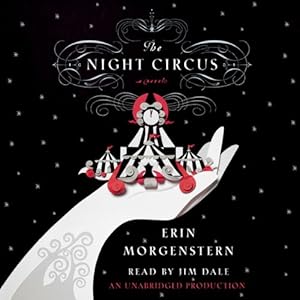
Audiobook Review: The Night Circus


The Night Circus (2011)
Wriiten by Erin Morgenstern
Narrated by Jim Dale
Run Time: 13 hours, 40 minutes
Publisher: Random House Audio/Doubleday

The music started off with spooky, ethereal tones. I was nervous as to whether or not I'd like audiobooks after a first try two years ago that turned out less than stellar. I knew Jim Dale was supposed to be a legend within the audiobook community after doing the narration for the Harry Potter series, so I figured The Night Circus was a good place to start.

The book is the story of Celia Bowen and Marco Alisdair, two magicians of considerable skill pitted against each other in a high-stakes "challenge" that could result in death. Celia is the leading illusionist at Le Cirque De Reve, a late 1800's traveling circus that "opens at nightfall, closes at dawn." Marco helps run the circus, but has ulterior motives for his involvement. Eventually, the two start to be smitten with each other before conflict ensues.

The book's strength is in its descriptions of items, not its plot. Hearing Dale describe colors, foods and textures, among other items, was a delight. He is so good, I would pay to hear this man read nutrition label facts at a grocery store. He nails various English-language dialects, including what sounded like Irish and Scottish, with ease. The praise and accolades showered on Dale were validated by his performance here.

The world Morgenstern creates and Dale explains is stunning at first glance, but as the novel progresses, the luster starts to wear off and the characters become fairly predictable. When the two magicians try to find a way out of the challenge, I knew exactly how they would do it, in part because it had been strongly hinted at earlier in the book. By the time the book's main plot conflict was over, I was ready to pack up and go, but there was still 45 minutes left to tie up the story. At the end, there's a plot twist that sort of reminded me of Christopher Nolan's film The Prestige in terms of a shocking twist finale. It worked in Nolan's movie, but it did not work here.

Rating: 3.5 stars. The audiobook narration was a delight to listen to coming to and from work and the world of The Night Circus is intricately detailed. However, the book is hindered by a slow-moving plot, especially in the cumbersome third act. Having said that, it was a great starter audiobook and had me rush onto the next one. And the one after that. And the one after that. Then, I finally said screw it and got an Audible subscription.

The Harry Potter connection doesn't end with Dale. Potter film producer David Heyman will also produce a movie adaptation of this novel as well. Lionsgate/Summit, the film studio that has had huge success in novel adaptations of The Hunger Games, Divergent and Twilight, will handle and oversee this one too. No word on when we might see Marco and Celia grace the big screen, but as I read the book, I could imagine how beautiful it could look.

Friday, November 28, 2014

Film Friday: Mockingjay (Part 1)

NOTE: The conclusion of a three-part series. For part one, discussing the original Hunger Games, click here. For part two, about Catching Fire, click here.

After the cliffhanger ending of Catching Fire, Mockingjay picks the story right up and shows Katniss Everdeen unsure of herself as she takes the mantle of the titular bird and becomes the face of the rebellion against Panem. Meanwhile, Peeta and Johanna are held captive in the Capitol, leading Katniss to demand the rebels of District 13 rescue her fellow games participants. Eventually, there is a full-on assault on the Capitol.

One of my few issues with the book was that Katniss seemed to take a step back in her journey toward being the face of the rebellion, as if she was suddenly unsure of herself. While some hesitancy is expected, I thought author Suzanne Collins overplayed her hand on that aspect. If my town was firebombed out of existence by its own government, I'd be beyond furious and wanting to take action. However, when the assault on the Capitol begins, it's a thrilling page-turner from the word go.

One of the book's strengths is the skewering of creating propaganda for a war. District 13 and the Capitol are both trying to rally support, propaganda pieces, or "propos" as they are called in the book, each side is using people to sell the cause, some better than others. Let's just say Katniss isn't a natural in a studio reading prepared scripts. 

I think of The Hunger Games series like dual sliding scales. On the first scale, the survivalist and hunting themes in the original novel are a major presence, but by the time the reader gets to Mockingjay, they have diminished. Conversely, the second scale is the political and social commentary, which is noticeable in the first book but dominates the third.

Grade: 4/5 stars. Despite a couple of missteps, The Hunger Games saga has a generally satisfying ending.


As for the film, my dislike for singular books being split into multiple parts has been documented. Also, Mockingjay Part 1 was coming off my favorite book and film in the series, so it was already behind the proverbial 8-ball. Having said that, the film makes the most of being prematurely split into two. The end scene isn't quite where I thought it was (though it came really close and the screen goes black at where I had guessed it would end).

Jennifer Lawrence (Katniss), Woody Harrelson (Haymitch) and Elizabeth Banks (Effie) make the best of the material while Julianne Moore (Coin) came off as a bit of a stiff, but one could argue her character is in the book as well. Yes, Effie subs in for Katniss' prep team in the book and is in District 13 in the film. This was a change I totally expected in part because fans and viewers who have not read the books would have been asking throughout Part 1, "Where's Effie?" They probably could have been true to the text had the film not been split into two.


The other major change in the film is the rescue. In the book, Katniss' first-person perspective does not allow us as a reader to see it and we are instead in Katniss' head where she frets about the possibilities. So it was a welcome change when the camera goes along with the rescuers and we see it unfold. Chalk that up to the camera being a third-person POV.

There is another potentially huge change involving Katniss' deal of becoming the Mockingjay of the rebellion, but it depends on how things unfold in Part 2.

Grade: 3.5/5 stars. Is the film good? Yes. Should it have been split into two? Probably not. 

Friday, November 21, 2014

Film Friday: Catching Fire

NOTE: The second in a three-part series leading up to Mockingjay, Part 1. To see the one on the original novel, The Hunger Games, click here.

I rarely watch television and when I do, I actively avoid reality shows. So it wouldn't surprise you when I say I dislike Survivor, especially its All-Star editions. The same idea is behind part 2 of The Hunger Games trilogy, Catching Fire.

Katniss and Peeta thought they had escaped the clutches of the Capitol for good. But when the 75th Hunger Games (also referred to as the Quarter Quell) rolls around a year after the events in the first novel, they are back in with other victors from previous editions of the Games. Meanwhile, unrest continues in the districts as Katniss and Peeta's act of defiance at the end of the first Hunger Games sparked talk of a revolution.

Of the books in the series, Catching Fire is my favorite. The spectacle of the arena continues to be peeled away for the grotesque and macabre rampage that it is and the political subtext that started in the original becomes more apparent. Peeta is elevated from being the damsel in distress and Katniss rounds into form as the take-no-prisoners heroine the reader knows she will eventually become. The book also has one of the better cliffhanger endings of any book I've read in recent years and showed a willingness on author Suzanne Collins' part to shake up the formula her books had held to up to that point.

A lot of people like the side characters in the original novel, namely Rue and Prim, but I like the supporting characters in Catching Fire better. Each of the previous victors that are being forced to return to the Games rebel against the Capitol in their own unique way, from Beetee's knowledge of electricity to Finnick's inner rage at what happened to his sweetheart Annie. There are major consequences to side characters we've known since the original novel, so the stakes are raised more than they ever were in The Hunger Games.

One caveat on Catching Fire is the audiobook version. I briefly flirted with trying to listen to audiobooks last year and the first one I tried was Catching Fire. I made it about two hours in before I couldn't take it any more. Katniss came across as a whiny heroine that didn't have a backbone.

When the first Hunger Games film made $152 million in its opening weekend, still the highest-ever for a non-sequel, a green light for Catching Fire was a foregone conclusion. The studio swapped director Gary Ross for Francis Lawrence (no relation to series star Jennifer) in order to make a November 2013 release date. Some were concerned because Francis' most notable film up to that point was I Am Legend, the Will Smith zombie action film. The worries turned out to be for nothing.

Catching Fire managed to improve on the original in every aspect. Less shaky cam, better character development, and with some minor exceptions it stayed true to the text. The movie is second only to Silver Linings Playbook on my "best Jennifer Lawrence performance" list. She managed to show Katniss' growing confidence in her role as the eventual Mockingjay well.

Like the first movie, my favorite scene has Stanley Tucci's Caesar Flickerman in it. Main characters Katniss and Peeta pull a surprise on the capitol that leaves the audience upset at Caesar. Again, as was the case in The Hunger Games, the book's more political subtexts really stood out here.


The movie is intense and managed to leave the cliffhanger from the novel intact. When I saw the film with my sister and brother-in-law, I could hear him saying something to the effect of, "Oh man, they're going to cut it on that last shot" while I said "Just like the book." Below is the last scene, in its entirety, that set up the countdown clock to this weekend's Mockingjay Part 1.


Catching Fire managed to raise the stakes, change up the world of The Hunger Games and was a page turner from beginning to end.

Grade for the book: 4.5/5 stars
Grade for the movie: 4/5 stars

What did you think of Catching Fire?

Friday, November 14, 2014

Film Friday: The Hunger Games

NOTE: Part 1 in a three-part series leading up to Mockingjay, Part 1.

"But it's kids killing kids."

That's what friends and co-workers would say whenever I mentioned Suzanne Collins' novel The Hunger Games. The story of a heroine in a post-apocalyptic North America taking part in a gladiatorial game to the death is a hard sell to people unaware of the novel's first half. Supposedly, the novel was conceived by Collins after flipping through television channels and seeing a reality television show then footage from the Iraq war. With that in mind, the novel's first half is the best part because it's able to set the tone for the unsettling action to follow. The early scenes of The Reaping, where main character Katniss Everdeen volunteers to take the place of her much younger sister Prim in the games, and the pomp and circumstance surrounding the state-sanctioned games are all a bit unnerving in that it isn't all that far off from reality.

My favorite scene in both the book and the subsequent film has nothing to do with the games or the arena. It's when the contestants, or "tributes" as they are called, are interviewed by television hose Caesar Flickerman. The crowds adore the tributes, yet everyone knows those same contestants are heading into certain death...and the crowds are entertained (cue Gladiator's Maximus "Are you not entertained?) There's jabs at high society, all adorned in ridiculously over-the-top fashions, wagering over who will survive the games The dark satire, practically embodied by the oft-quoted "May the odds be ever in your favor," plus elements of class warfare, poverty, and government oppression elevate the series above its YA post-apocalyptic brethren.

My one complaint in the book is the graphic descriptions of some of the tributes' deaths once the games begin. There were whole pages that I was like "Yeesh, that's a gruesome way to go," followed by me quickly turning the page. However, despite those few pages, the book has something to say about modern culture that rises above the gladiatorial fray. It's worth a read. Rating: 3.5/5 stars.

When The Hunger Games film debuted in March 2012, the fate of a studio was riding on it. Lionsgate was fending off a takeover attempt by activist shareholder Carl Icahn and the studio plunked down $78 million to make the film. They hired director Gary Ross, who I enjoyed previously from when he directed Seabiscuit (but he's also known for directing Pleasantville), and Collins herself helped write the script.

The film made Jennifer Lawrence, who was already an ascending star via Winter's Bone and X-Men: First Class, a household name. But the movie's strength is in its supporting cast, namely Stanley Tucci as Flickerman, Woody Harrelson as Haymitch Abernathy and Donald Sutherland as the villainous President Snow. Tucci is outstanding as Flickerman and really drives home the satire of the reality television show that is the games. Harrelson is likeable as Katniss' drunk mentor and Sutherland has arguably the best line in the movie when he speaks about containing the spark of hope against an oppressive regime. Below is the scene where Katniss is interviewed by Flickerman...


Thankfully, the book's more poignant points don't get diluted in the jump to celluloid, though some minor side characters are left out. The biggest example is Madge, the daughter of the mayor of District 12, who gives the famous mockingjay pin to Katniss (in the movie, Katniss gives it to her sister Prim, who then returns it to Katniss). Also, I thought the movie gave more of a sense of place, since you can very easily tell the filmmakers shot in North Carolina and Appalachia, where District 12 is said to be in the novel. The movie handles the violence better than the book, mostly through the use of shaky cam and quick cuts so as to keep a PG-13 rating. As a result, I usually tell people interested in the movie but concerned about the violence to see the movie rather than read the book. This is one of the few properties that breaks my rule of "book first, then movie." Rating: 4/5 stars

And it's more than just "kids killing kids."

Have you seen The Hunger Games? Are you excited for Mockingjay Part 1?