Anger and news are a powerful combination. There are those who get angry over breaking news. Then, there are those who get angry over investigations for what is or what is not discovered. As a journalist myself, there are stories that I've had, some in the form of a feature series, that left me shaking my head in disbelief and bordering on anger.
A similar affair occurred for journalist Charlie LeDuff when he left his reporting position at the New York Times and returned to his native Detroit to work at the Detroit News. His book Detroit: An American Autopsy (2013, Penguin) chronicles that period of time when he returned to the Motor City and saw how dire its situation was. At the time, the Great Recession was at its peak and both General Motors and Chrysler declared bankruptcy and Ford was not looking good either. Emergency personnel response times were terrible in parts of the city, arson was rampant and whole blocks were deserted, in part because of sky-high foreclosure rates, or had squatters. Understandably, LeDuff was furious over the lack of care in his hometown.
As he starts to unravel stories that indicate what caused the downfall of one of the nation's economic hubs, we learn a little about his own life as well. We see corrupt political figures go to jail, a man frozen in ice and a general sense of despair from the city's residents, as if they realize the problem is too big to overcome.
But the book has its problems. First, the man in ice story, one of the more memorable parts of the book, has had its validity questioned by other Detroit media outlets for various inconsistencies when the print version appeared in the Detroit News. Second, LeDuff can be an unlikeable gruff at times, but I think that's more of an extension of his anger at the city's sullen state. Third, LeDuff shows a lot of the problems in the city, but I don't think he quite got to the root causes and there are no solutions discussed. The latter issue didn't bother me as much because the story of Detroit is ongoing.
Grade: 3/5 stars. LeDuff's reporting has an edge to it that jumps off the page, but possible errors in one of the more memorable stories in the book as well as the incomplete dissection of the causes of the city's plight hold it back.
About a month and a half after the September 11th attacks, the World Series pitted the upstart Arizona Diamondbacks against the powerhouse New York Yankees in what many observers of the sport consider to be one of the best playoff series of all time. But more importantly for the country, the seven-game series was something to rally around, a sign of life returning to normal. It was a moment of people coming together through sport.
John Carlin's Playing the Enemy (2008, Penguin) paints a stirring picture of a nation, South Africa, transitioning out of apartheid hatred and unifying around sport. But to call it a sports book would be a severe disservice, because Playing the Enemy manages to elevate beyond a simple sports story. In journalism, the term is "sports feature writing," where sports ties into a larger social issue and Carlin does it fantastically.
Several friends of mine have visited South Africa (one even stayed) and I found myself fascinated by that country. Carlin's book gives a thorough history of the internal struggles within South Africa leading up to the 1994 election of Nelson Mandela and the 1995 Rugby World Cup, which the country hosted. Mandela was a political genius and Carlin traces how he managed to meet with white leaders F. W. de Klerk and P. W. Botha and eventually be released from prison. Then, he bet his political capital on the Springboks national rugby team, captained by Francois Pienaar, to unite the nation during the World Cup. Carlin also tells the story of the Viljoen brothers who were split on the issue of ending apartheid and gives equal time to black aspirations of newfound equality and white fears of a vengeful Mandela. As the World Cup got closer and closer, the book veers more toward the sports aspect.
Carlin presents the story with a wide scope and I knew much more of South Africa's terrain, culture, demographics, and history than I did prior to picking up the book. Sports fans may feel like they're plodding though the first two-thirds of the book in order to get to the rugby action and conversely, politicos may be less interested in the rugby, but save for a bit of a slow-down in the middle of the book, I was invested from page to page. And that's the definition of a good read. Grade: 4/5 stars.
In the holiday season of 2009, Warner Bros. released two high-quality sports films based on books of true stories. The first, football drama The Blind Side, won Sandra Bullock an Oscar and was nominated for Best Picture, but lost to The Hurt Locker. The second film, South African rugby drama Invictus, was met with mostly positive but not rapturous reviews like previous Clint Eastwood-directed films. Morgan Freeman and Matt Damon were both nominated for Oscars, but they, and the rest of the film's crew, came home empty-handed. Damon lost to Christoph Waltz for Inglourious Basterds while Freeman lost to Jeff Bridges for Crazy Heart.
Invictus tries to straddle both the sports aspect of the story and the political and as a result, it has a few quirks. Audiences unfamiliar with how rugby is played will be a bit lost in following the action. Also, the book's history of the years leading up to Mandela's release from prison and first few years after is completely cut from the film, save for a scene where the team visits Robben Island prison. However, the film's overall theme of sports acting as a unifier in a post-apartheid world shines through in several scenes, including one where the team does a publicity visit to a black village...
And my favorite scene in the movie, when Pienaar, played by Damon, meets with Freeman's President Mandela and they discuss how to make people perform better than they first thought possible...
Had I not read the book, I'd score Invictus a bit higher, but knowing that the whole back history was cut dampens the movie. The book itself is a slice of South African history and the movie is a slice of the slice. That's not to say the movie is bad. It has fine work behind the camera by Eastwood, a great soundtrack and Freeman and Damon do stellar jobs, but the total picture of the history didn't quite make the jump to celluloid. Grade: 4/5 stars.
Have you read Playing the Enemy or seen Invictus? What did you think?
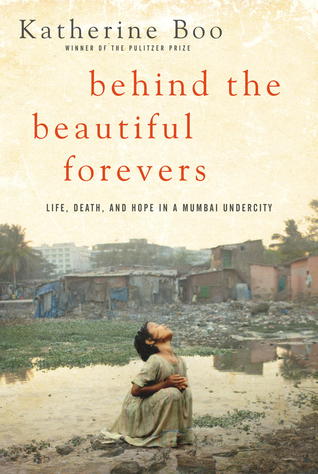
When I told some friends that I was going to be reading Katherine Boo's book Behind the Beautiful Forevers (Random House), some asked in dismay why I'd read a book that screams "Downer!" I was somewhat taken aback by the question because I thought it inadvertently highlighted how there are some people that can walk this earth completely oblivious or ignorant to the plight of others around the globe. It's partly this reason why I try to read at least one book per year about some other country besides the U.S. This year, Forevers was one of two.
I've never been to India, but I understand the increasing role they play in the global economy. According to the World Bank, India's GDP was averaging 9.5% prior to the 2008 global recession, while the U.S. was averaging about 2.75%. When the recession hit, India's GDP had dropped to 4% and the U.S. rate was below zero. Factor in India's social caste system and its juxtaposing new fortune and the conditions create a horrible tease and grim reality for slum residents.
Perhaps that's nowhere more evident than in the slum of Annawadi, adjacent to the city's main airport, where Boo's tale of life in the Mumbai underclass takes place. The airport gleams with construction walls touting "Beautiful Forevers," hence the title, but behind those walls lie desperate people that want the benefits of their country's newfound economic muscle.
We meet several people along the way, including the ambitious Asha, the area's female slumlord; Abdul, a teenage boy who is the breadwinner for his family by picking garbage; Fatima, a one-legged woman who dies a terrible death; and Kalu, a homeless boy who is killed, but is hardly given a second thought by authorities.
Boo, a Pulitzer Prize winner, writer at The New Yorker and formerly of The Washington Post, writes of the residents' plight as a reporter and it shows. The level of detail in her writing is fantastic and balances a tender sense of care with the grim realities of life in Annawadi. Boo shatters any pre-conceived notions of a slumlord or of religious aid groups in the slum. The book won the National Book Award for nonfiction in 2012 and deservedly so.
It is an uncomfortable, heart-breaking and challenging read. There were many times where I had to set the book down and reflect on whether it was hypocritical to read about people so impoverished while I'm curled up on the couch enjoying a Coke on a warm fall day. It is impossible to read this book without feeling some empathy toward the people who were trying everything they could to get out of Annawadi and into India's middle class. It challenges ideas of income inequality, pure free-market capitalism and those it can leave behind.
Rating: 4/5 stars. Behind the Beautiful Forevers is a difficult and challenging read because of it's inherently brutal subject matter, but it is really well-written and illuminates a side of humanity few in America think about. I am better off for having read it.
While there hasn't been any talk of a film adaptation, though YouTube vlogger and author John Green has called for it, the National Theatre in London just opened a play based on the book. Below is an interview author Katherine Boo gave with the New York Public Library about the book.
It was a good night to work for Penguin and Farrar, Straus and Giroux last night at the National Book Award ceremony. Penguin books took the honors in fiction and young adult, while FSG walked away the winner in nonfiction and poetry. All four winners are first-time recipients of the award.
Fiction:
• All the Light We Cannot See by Anthony Doerr (Scribner)
• Lila by Marilynne Robinson (Farrar, Straus and Giroux)
• Redeployment by Phil Klay (Penguin Press)
• Station Eleven by Emily St. John Mandel (Knopf)
• An Unnecessary Woman by Rabih Alameddine (Grove Press)
The Winner: Redeployment
My Pick: All the Light We Cannot See My Runner-up: Station Eleven
Heading into the awards ceremony, I figured it was going to come down to the books by Klay, Doerr and St. John Mandel. All three are on my TBR, though I've read large chunks of the latter two and I've sampled Redeployment. Most of the social media traffic and blogs seemed to favor Doerr and St. John Mandel, though Klay had gotten a lot of attention earlier in the year. All the Light We Cannot See is written in a very lyrical style, while Station Eleven is a wonderfully descriptive take on the well-worn post-apocalyptic genre. Meanwhile, Redeployment is a jarring collection of stories that look at a soldier's life both at war and returning home. Consider the opening paragraph, "We shot dogs. Not by accident. We did it on purpose, and we called it Operation Scooby. I'm a dog person, so I thought about that a lot." Quite the opener for what follows. Much like when The King's Speech won the Oscar in 2010 when I was rooting for Inception and The Social Network, I get why Klay's book won the award, despite not being my first choice. Definitely a worthy winner.
Nonfiction:
• Age of Ambition: Chasing Fortune, Truth and Faith in the New China by Evan Osnos (Farrar, Straus and Giroux)
• Can't We Talk About Something More Pleasant? by Roz Chast (Bloomsbury)
• The Meaning of Human Existence by Edward O. Wilson (Liveright/Norton)
• No Good Men Among the Living: America, the Taliban and the War Through Afghan Eyes by Anand Gopal (Metropolitan/Henry Holt)
• Tennessee Williams: Mad Pilgrimage of the Flesh by John Lahr (Norton)
The Winner: Age of Ambition
My Pick: Can't We Talk About Something More Pleasant?
As someone who initially read only nonfiction books when I resumed reading daily as an adult, I thought I had my finger on the pulse after reading or successfully guessing the last two winners (Katherine Boo's Behind the Beautiful Forevers and George Packer's The Unwinding). Apparently, the judges and I didn't see eye-to-eye on the nonfiction side at all this year. My early picks didn't make it onto the shortlist, then the book I thought would win lost out to Osnos' account of modern China. That isn't to say Age of Ambition isn't good, but that it wasn't on my radar at all until the shortlist. And even then, I thought Chast had it. Consider Age of Ambition the newest addition to my TBR list.
Other winners included Louise Gluck for Faithful and Virtuous Night (Poetry) and Jacqueline Woodson for Brown Girl Dreaming (Young People's). Both Gluck and Woodson are huge names in their respective fields, so it's great to see them finally get a National Book Award to add to their already large trophy cases.
A book that has taken the reviewer community by storm in recent years is Ernest Cline's Ready Player One, a hybrid of "The Matrix," "Tron" and "Willy Wonka." The story involves a Midwestern teenager who spends his days in a virtual reality world called the OASIS because the real one has succumbed to catastrophe. He hopes for a better future by participating in the OASIS treasure hunt, created by the its deceased creator. After stumbling onto the first clue, it's a race against time, corporate interests and other players to find the treasure.
The primary characters are teens, but calling the novel another dystopian YA book would be selling it short because of its timely themes. People around the world want to escape into a virtual reality whether it be the Internet or the novel's OASIS. We create online profiles of ourselves, promoting our best qualities and doing our best to hide the less-than-good ones. There's also a running plot about a nefarious corporation trying to control the OASIS and given the ongoing furor of net neutrality, the timing is perfect. Cline delves into these ideas and wraps them in a fun action-adventure package rife with 1980's and early video game references. As someone who was born in the late 80's, I got most of the references, but some flew over my head. The plot and the worlds were very well-constructed and with a minor exception or two, there wasn't anything that seemed out of place or not cohesive with the overall storyline. There's also a romance subplot that serves the story well, but doesn't feel shoehorned in for the sake of having a love story. As a result, the book is accessible to a much wider audience.
Ready Player One is one of the better fiction books I've read in a while and is the best I've read this year. Grab a copy and enjoy the ride. Rating: 4/5 stars
As one may expect, a film version is in the works. Cline sold the rights to producer Don De Line and Warner Bros. after a fierce bidding war that included at least five studios and production companies. De Line worked on films like "The Italian Job," "Green Lantern" and "Pain and Gain." Cline wrote the first draft of the screenplay, but Zak Penn was commissioned to rewrite the script this summer and get it closer to a point where the studio can start hiring a director and begin production, according to Hollywood blog The Wrap. Warners' 2015 and early 2016 slate is mostly booked and considering the many effects that would be involved in recreating the OASIS, I can't imagine the movie version to come out any earlier than late 2016 or 2017.
Marriage woes are nothing new to a novel, but Gillian Flynn's Gone Girl puts them in an even more sinister light. When I delved into the book in early September, I knew it was going to be a dark and twisty ride, but the characters are truly some of the more despicable I've seen on the page in recent memory.
Flynn is an excellent writer and wrote with a sense of authority on how the media would cover something like the disappearance of Amy Dunne and the accusations mounting against her husband, Nick. The details are impeccable, down to Rebecca, the crime blogger looking for a career-changing interview and the police detectives. Several of the side characters are genuinely likable, particularly Go and Tanner Bolt, Nick's sister and defense lawyer, respectively. Between the lead characters and Go, she is easily the sanest of the three and has dialogue reflective of what the reader would think or ask during situations.
One of the biggest problems I had with the book was that I never bought the characters truly ever loving each other. All of their interactions seemed to be skin-deep or making some funny and snide comment about a party crowd or society in general. Every married couple I know has some deep connection, whether it be through religion, shared interests, similar lifestyles, etc. I never saw that in Nick and Amy. As the book progressed, my predominant thought usually bounced back and forth between "These two should have never gotten together" and "These guys actually liked each other enough to marry?"
Overall, I thought the book was good, but not the rave that many critics viewed it as when the novel debuted in 2012 (just look on the paperback's back cover for the effusive praise). Again, as was the case with The Fault in Our Stars and The Emerald Mile, perhaps I came in with unrealistic expectations. I'd rate it 2.5/5 stars.
The movie is very well-made, a testament to director David Fincher and Flynn's screenplay. The dialogue is just as sharp as in the book and the characters are a bit more believable, especially the two leads. During the movie, there was never any point when I thought, "That would never happen" or "That's completely not from the book." In other words, the novel's adaptation nipped and tucked at sections of the book, rather than a full-scale amputation of key parts. I thought the movie also tried to make the connection between Amy and Nick pre-marriage stronger. I fully expect the movie to be in the Oscar conversation, especially Rosamund Pike as the missing wife, Fincher as director and for Flynn's screenplay. I do think it can get into the Best Picture race nearly on the strength of Fincher, Affleck and Pike alone, but I doubt it'll take home the trophy. I'd rate it 4/5 stars.
*Be advised, the rest of the review contains spoilers, so consider yourself warned.*
Despite the great twist of Amy framing Nick and her expressing how she would frame him for her disappearance and murder, the novel lost steam for me when Amy was robbed at the backwoods motel. Once that happened, I thought for sure she was going to head back to her husband, but since that happens three-quarters of the way through the book, the rest of it felt like going through the proverbial motions to get to the ending. I did not expect Desi to meet the horrible death of getting his throat sliced that he does (in the movie, it is a very gross and horrible death, whereas the book is less graphic in its description). Frankly, I much preferred the novel's way of handling it and that scene was a detractor for me in the film. Also, Rebecca and Betsy Bolt, Tanner's wife, were cut entirely from the movie. It would have been nice to see Betsy on screen to act as a contrast to Nick and Amy's shattered relationship. However, Tanner's classic line at the end of the book was directly transferred to the screen and got an uproarious laugh during the screening I went to.
Did you read and or see Gone Girl? What did you think?
As always with the first of the month, I do a quick update of books on tap. For October, the unofficial theme is travel. In recent years, I've grown more and more interested in traveling the world and seeing different places (this despite being the pickiest eater I know). Travel makes us understand the world at large and how ideas and cultures converge, especially in a global economy. Here's a quick look at what I'll be reading through October...
Behind the Beautiful Forevers by Katherine Boo (Random House): India is rapidly changing as a result of globalization and residents in a Mumbai slum are getting left out, but hopeful they will eventually reach the middle class. Boo's book won tons of accolades when it was first published, including the National Book Award for nonfiction and the PEN/John Kenneth Galbraith Award.
A Walk in the Woods by Bill Bryson (Broadway): Bryson and Paul Theroux have long been named the best travel writers around, so before I delve into Bryson's more recent fare like One Summer, I wanted to read one of his earlier books. After living in Britain for 20 years, Bryson and a friend attempt to hike the Appalachian Trail from Georgia to Maine in a more comedic take on the usual travelogue. Rumor has it that a film version will be released next year.
Travels with Casey by Benoit Denizet-Lewis (Simon & Schuster): When I first saw the trailer for Denizet-Lewis' book earlier this spring, I immediately added it to my TBR list. He travels all over the country with his nine-year old Labrador mix Casey and visit everyone from a stray dog rescuer in the Midwest to famed dog whisperer Cesar Milan in Southern California to a beagle-shaped bed and breakfast in Idaho. As a former dog owner myself, I'm especially looking forward to this one. Below is the book's trailer:
Half the Sky by Nicholas Kristof and Sheryl WuDunn (Vintage/Knopf): This book is a bit outside my usual fare, but the book has received universal praise for its highlighting of women's issues around the world. At times, reading should challenge us and our world view. Kristof and WuDunn just released their newest book, A Path Appears, but I opted to read this one first. Half the Sky was made into a PBS miniseries as well.
One of my favorite fall pastimes has been to participate in a fantasy football league with friends. After having consecutive years of dwelling in the cellar, I though this year was the year my team, A New Hope (complete with a lightsaber logo), would rise from the ashes and take the league crown for the first time. My team has the components to be something special with a stellar quarterback (Andrew Luck), a great running back (Marshawn Lynch) and a good wide receiver set (Alshon Jeffery, Jeremy Maclin, Michael Crabtree, Michael Floyd).
So far, I'm 0-2. As in 0 wins, 2 losses.
Meanwhile, my brother-in-law's team, Honey Baked, is annihilating the competition and took the league award for highest score last week. My dad's team is also doing well despite taking the risk of drafting Jimmy Graham, the tight end from New Orleans, as his first-round pick. Both of their clubs are 2-0.
Such is life during football season when you are in a fantasy league. The camaraderie, rivalries and funny league traditions are perfectly documented in Matthew Berry's Fantasy Life, which came out in paperback earlier this summer from Riverhead.
The book chronicles Berry's time in fantasy sports (he previously worked as a screenwriter on shows like "Married with Children") and harnessing the internet to become one of the most recognizable experts in the genre. In each chapter, Berry tells of the many shenanigans of leagues around the country over the course of a would-be season.
Each chapter reads like an extended post from his "Talented Mr. Roto" blog, so if you are a reader of Berry's online column, the book doesn't stray too far from that writing style. That's not a bad thing, though. There were some moments that were genuinely laugh-out-loud funny and others that left me thinking "Really? You would do that for fantasy sports?"
I am not sure if readers who are unfamiliar with fantasy leagues would enjoy it as much as those who have already caught the bug, but to Berry's credit, there are some anecdotes that involve players' wives and spouses that don't play, showing that side of the sport.
Overall, it's a light and enjoyable read. When I was reading this, I was handling several bleak, high-profile stories, so when I came home from work, this was a welcome respite. Rating 4/5 stars.
Here's an example of one of the more memorable hijinks in the book:
Do you have a favorite fantasy sports moment or embarrassing moment in your fantasy league? Are you guys having any better luck this season than my team?
Author's Note: Due to the release of The Fault in Our Stars on DVD/Blu-ray and download on Tuesday, Sept. 16, I'm combining the book and film reviews.
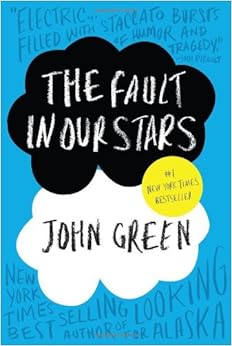
Spoilers are like vampires, they suck the anticipation right out of a book or film or television show. In the literary world, I hadn't had a spoiler happen in ages until I was about to read John Green's The Fault in Our Stars (Dutton/Penguin). I was trying to squeeze in reading the book before the film came out earlier this summer and I wanted to get a sense if this young adult book was attracting readers who don't normally read YA books, like The Hunger Games did in recent years. After scouring Goodreads and YouTube, the answer was a definitive "yes." One YouTuber, however, opted to talk about the book's ending and thus, spoiled the novel in what was the worst spoiler I've had since Cedric Diggory's death in Harry Potter and the Goblet of Fire.
The book itself is wonderful in telling the story of Hazel Grace Lancaster and Augustus Waters, two Indianapolis teens diagnosed with different forms of cancer who fall in love. The book plays off of the usual cancer-related groups (cancer support groups, the "Genies" being a stand in for the Make-a-Wish Foundation, cancer drug trials, etc.) in a way that grounds the book and gives off the impression that this could actually happen. Both Hazel and Augustus are written well. They're not doe-eyed innocent creatures who suddenly realize how messed up the world is, but they're also not the most mature teens ever seen. They still do stupid teenager things and have their moments of teenage pretentiousness.
Despite the witty writing, the book hinges on the twist that sets up the ending and frankly, even if I hadn't had the ending spoiled for me, I probably would have still guessed the outcome. The book tries to push one possibility so hard, one begins to suspect the opposite will happen, which it in fact does. I probably would have rated it a bit higher, but because of the spoil, I'll give the book a 3.5/5 stars rating.
When the movie came out, my publication's entertainment writer knew I was an avid reader and asked if I had read the book. I said yes, only for her to ask if I could write something up that compares the book and film. I went to a late Friday showing and as the ticket-taker at the theater glanced at me and my ticket, she stifled a laugh. I braced myself for a chick-flick bonanza with screaming teenagers in the audience, but luckily the movie was not like that.
Shailene Woodley and Ansel Elgort play the film versions of Hazel and Augustus with a terrific supporting cast led by Laura Dern and Willem Dafoe. The Amsterdam sequences were great in the book but were better in the film, especially Dafoe's crusty portrayal of Peter Van Houten, a secluded bestselling author who has succumbed to his demons. Well-directed by Josh Boone, the film adaptation does the book justice and was one of the better films I saw this summer. Both in reading the book and watching the movie, I was constantly reminded of 2007's "Juno," a story that deals with quirky teens handling an adult issue in a Midwestern town, complete with an alternative-pop soundtrack. Personally, I like Juno a bit better. I would save future viewings for a date night, but "Fault" earned a solid B rating.
If you saw the movie or read the book, what did you think?
Maybe it's from my youth and watching the likes of "The Mighty Ducks" and "Remember the Titans," but I've always loved an underdog story. Whether its people overcoming personal obstacles or rallying to become the champion when no one expected them to win, I love watching people triumph. In the case of Daniel James Brown's The Boys in the Boat: Nine Americans and Their Epic Quest for Gold at the 1936 Berlin Olympics, originally published last year by Viking but was just released on paperback this summer by Penguin, the reader gets the best of both worlds in an excellent, page-turning read.
The book tells the story of the 1936 University of Washington rowing, or crew, team as they beat the rival University of California team and went on to represent the U.S. in the Berlin Olympics. Brown profiles every member of the team, especially Joe Rantz, who survived a rough childhood to get to college. Every member of the crew faced the hardships of the Great Depression, growing up in Northwestern logging camps, dairy farms and mining towns. Brown paints each setting, whether its the shell house where the crew's boat is stored or the Olympic race course, with painstaking detail akin to Laura Hillenbrand's outstanding Unbroken and Seabiscuit.
Initially, there are some personality clashes as people vie for spots on the crew, not to mention the inner rivalries between the class levels. But as the team gels together, the pace of the book quickens and I found myself rooting for the team more and more. I would sit in bed reading into the late night hours audibly cheering for the crew. Even the side characters like coach Al Ulbrickson, boat designer George Pocock and the sports journalists that follow the team, especially Seattle sports icon Royal Brougham, are all fully fleshed out.
As the story shifts to Europe, the pace picks up and Brown explains beautifully how Hitler wanted the Games to be, particularly involving filmmaker Leni Riefenstahl, as well as how the team interacted with other Olympians. I have seldom watched an Olympic crew race on television, but I have a better understanding of the sport, both in terms of the strength and stamina needed and the strategy involved. I was absolutely riveted in the last race.
Here is the trailer for the book:
I absolutely loved this book and it is one of the top 3 books I've read this year. When I write feature stories, it's books like this that I aim for as an example of feature writing at its best. The book celebrates the triumph of what people can do when they work together as a singular unit and achieve great things. I try to be judicious in handing out 5-star ratings, but The Boys in the Boat is a book I'm glad I own in hardcover and will remain on my shelf for years to come. Rating 5/5 stars
Apparently, there is a film adaptation in the works. In 2011, more than two years prior to publication, The Weinstein Company purchased the film rights to the novel. The company distributed and produced such Oscar fare as "Silver Linings Playbook," "The Artist," and "The King's Speech." At the time, it was announced that"Thor" director Kenneth Branagh was attached to direct. However, there has been little to no new developments since the initial announcement.
Below, Brown further explains how he came to write the book at a Q&A session inside Washington D.C. literary landmark Politics and Prose:
There have been several high-profile book-to-film projects buzzing about Hollywood this week. Here's a quick look at some of the key stories.
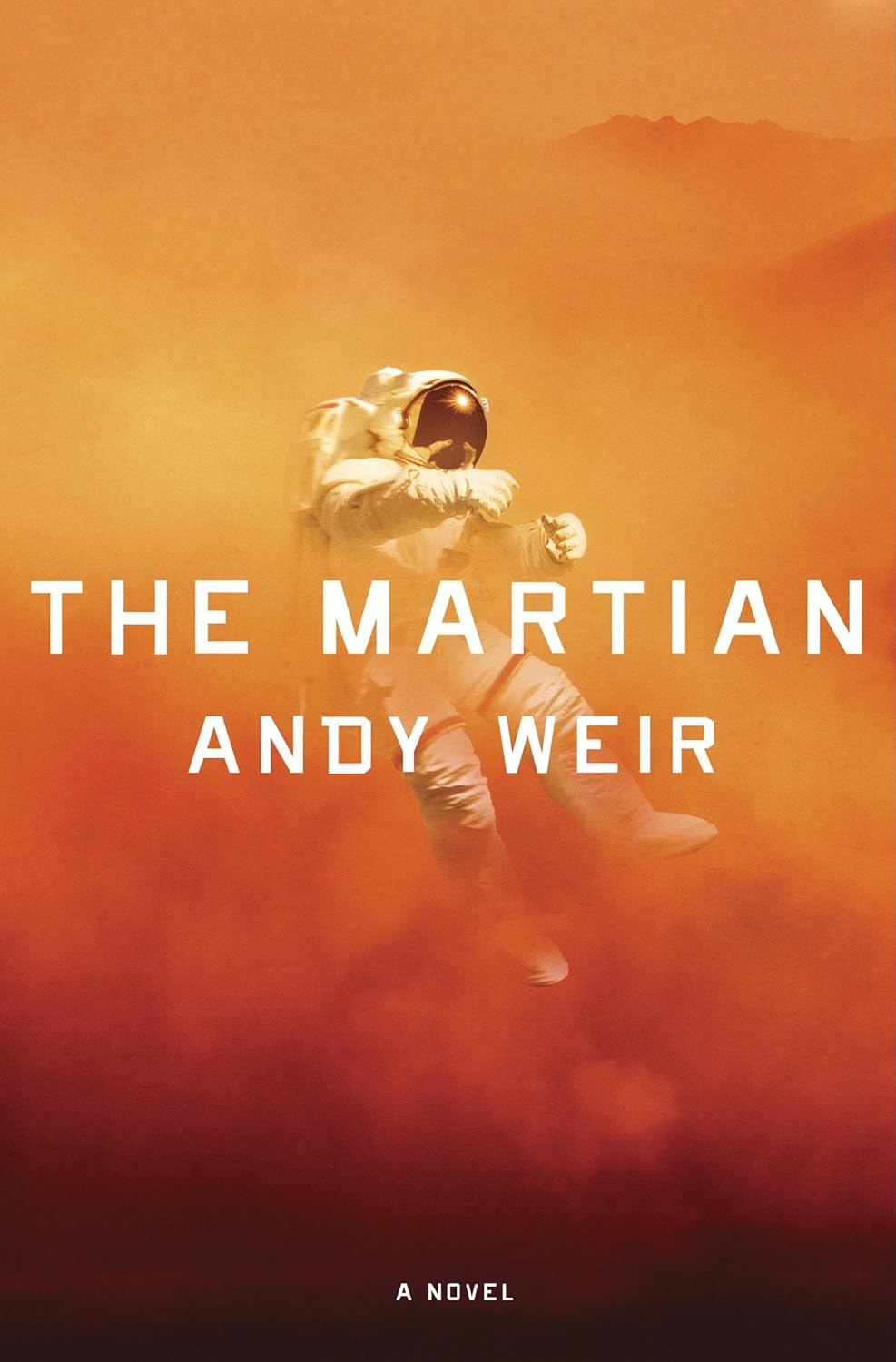
Ridley Scott and Matt Damon have been linked to an adaptation of the Andy Weir novel The Martian (published by Crown) for some time, but now comes word from Deadline that Jessica Chastain and Kristen Wiig may play the lead female roles in the sci-fi drama. The film is set to be released by 20th Century Fox in November 2015. The book follows an astronaut struggling to survive Mars after he is accidentally stranded on the Red Planet. Chastain will next appear in another sci-fi epic, Christopher Nolan's Interstellar. I read a good portion of The Martian a few months ago when I plundered my local Barnes and Noble and was intrigued by the story, but was put off at the sometimes juvenile dialogue and humor. Let's just say there was more bathroom humor than I anticipated.
From the folks at The Wrap, George Clooney is set to direct a film version of the Nick Davies book Hack Attack (published by Faber and Faber), which chronicled the British tabloid phone hacking scandal that rocked Rupert Murdoch's News Corp. Sony Pictures, where Clooney has an overall deal, will distribute the film and according to Jordan Zakarin, production will start next year. If this film is anything like Clooney's previous foray into journalism, 2005's "Good Night and Good Luck," I'll see it opening weekend.
Given the Hack Attack news plus recent book to film adaptations from Sony like "Moneyball," "Captain Phillips," "The Social Network" and "The Girl with the Dragon Tattoo," it should come as no surprise the film studio has reached into the publishing world and hired Ryan Doherty, the former senior editor of Random House imprints Ballantine, Bantam and Dell. According to Mike Fleming at Deadline, Doherty was the editor of some of the imprints' narrative nonfiction including Toms River by Dan Fagin and the Jim Henson biography by Brian Jay Jones (both have been on my TBR list for some time). Given the recent reshuffling at Penguin Random House, it will be interesting to see how these moves will affect the publishing giant going forward.
Fans of the Jojo Moyes bestseller Me Before You may or may not have imagined Daenerys Targaryen and Finnick as Lou and Will, but actors Emilia Clarke and Sam Claflin have snagged the lead roles. Clarke, who has garnered a large following on the heels of her role in "Game of Thrones" and Claflin, who starred in the most recent Pirates of the Caribbean and Hunger Games movies, will be seen together on the big screen in this romance adaptation next August. More details can be found here.