Showing posts with label All the Light We Cannot See. Show all posts

Monday, June 1, 2015

Audie Award Winners

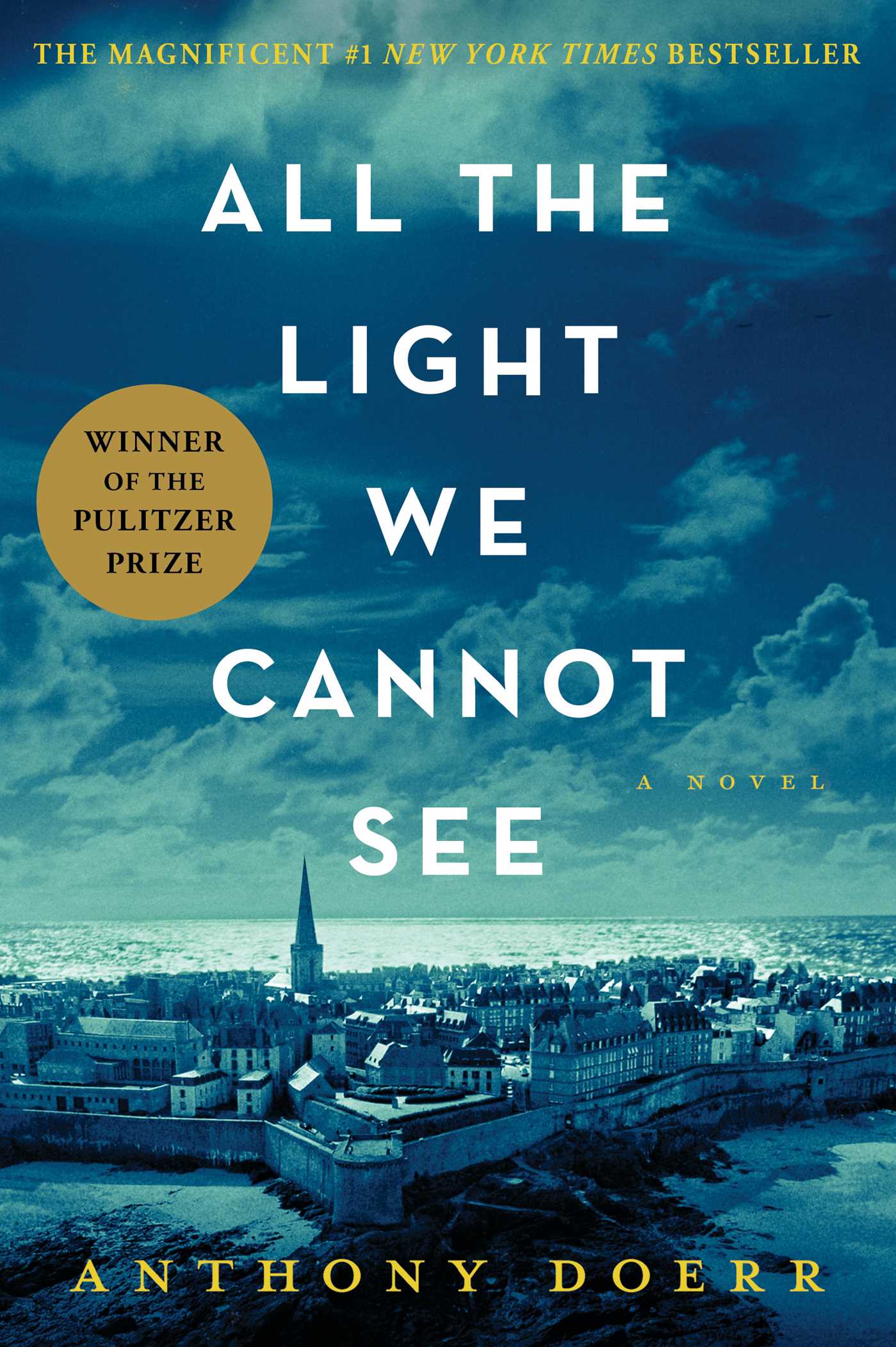
The annual Audie Awards were announced last week and several that I reviewed took home trophies. Most notably, Zach Appelman's terrific narration of Anthony Doerr's All the Light We Cannot See took home the prize in the fiction category. Also, Robert Petkoff won the award in the suspense category for his narration of Michael Koryta's Those Who Wish Me Dead.

Other notable winners included Amy Poehler's Yes Please, Alan Cumming's Not My Father's Son, Andy Weir's The Martian and Mandela: An Audio History, which won the Audiobook of the Year Award. Neil Gaiman's The Graveyard Book took the most awards with honors in the children's, best production and multi-voice performance categories.

To see a complete list of the winners and nominees, click here.

Tuesday, May 12, 2015

Audiobook Review: All the Light We Cannot See

All the Light We Cannot See (2014)
Written by Anthony Doerr
Narrated by Zach Appelman
Run Time: 16 hours 2 minutes
Publisher: Simon & Schuster Audio/Scribner

When All the Light We Cannot See debuted last year, I predicted it was going to be one of the key books of the year. The story seemed tailor-made to my tastes since I'm a World War II-story junkie. As the buzz grew and it was shortlisted for the National Book Award, I anxiously downloaded it for my Kindle, where it then sat for months as my appetite for reading on a digital device waned.

After a family member raved about the audiobook and implored me to read it that way, I gave it a shot. Halfway through me reading the audiobook, Doerr won the Pulitzer Prize and the audiobook itself is up for an Audie Award (winners will be announced May 28). The novel has been on the New York Times bestseller list for 52 weeks, as of this writing.

Doerr wrote a lyrical tale of Marie-Laure LeBlanc, a blind French girl who escapes Paris for Saint-Malo with her father who may or may not be in possession of a famous jewel coveted by the Nazis. Meanwhile, in Nazi Germany, Werner Pfennig is raised in an orphanage in a coal mining town, destined to be a miner until he is discovered to be a prodigy with radios. As these two characters journey toward their eventual meeting in Saint-Malo, they meet a number of characters along the way who have been scarred or twisted by the war.

War stories can be brutal and this one has its moments of showing humanity's brutality towards one another. But it has two of the most likable characters I've read in a long time in Marie-Laure and Werner. Both of them are extremely intelligent, overcome obstacles and have strong moral centers while the adults around them degrade into war. It has often been said that "war is hell" and as each minute passed, I was rooting for both of the main characters to survive the conflict.

Zach Appelman provides great narration work here. Rather than using voices, he opts to use subtle voice inflection with slight accents to differentiate the characters and it generally works. The one exception I can think of is the character of Nazi officer Sergeant Major Reinhold von Rumpel, who often sounds like a close relative to Hugo Weaving's Red Skull in the first Captain America movie. It was mildly distracting at first, but given the characters' similarities of being treasure hunting Nazis, it works.

It pains me when I talk to friends, family, co-workers and acquaintances who say, "Oh, I don't read much." As a result, I am occasionally asked about books that would cater to those that are not frequent readers. One of the beauties of this novel is that the chapters are very short, perfect for brief nighttime reading or those with shorter work commutes.

Bonus points to the folks at Simon & Schuster Audio for using Claude Debussy's "Clair de Lune" as the intro and outro music for the audiobook. "Clair de Lune" is one of my favorite pieces of classical music (I've written most of this review while listening to an extended version). It certainly doesn't hurt to start a book with the tender piano melodies of Debussy's masterpiece, especially when the song factors into the novel itself.

Rating: 5/5 stars. Why, oh why, did I torture myself and wait so long to read and review this book? The novel is terrific and worth every accolade.

Thursday, December 4, 2014

Goodreads Choice Award Winners

The winners of the Goodreads Choice were announced this week. More than 3.3 million readers cast votes for their favorite books of the year.

Best Fiction
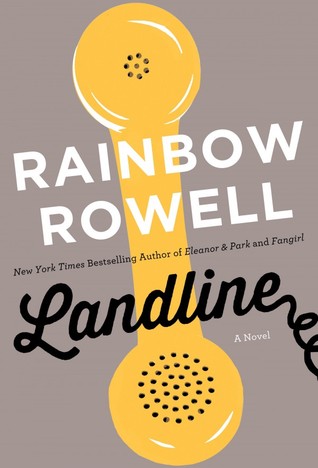
Winner: Landline by Rainbow Rowell - 46,154 votes
My Pick: The Storied Life of A.J. Fikry by Gabrielle Zevin - 19,818 votes
My Runner-Up: Station Eleven by Emily St. John Mandel - 11,608 votes

This category was going to be a slugfest from the word go and it didn't disappoint. As I expected, Rowell's fans came out in droves, as did avid readers of Liane Moriarty, who came in second place. Zevin's novel came in third, better than where I thought it would end up. Station Eleven came in ninth place, but it had an uphill battle since it was released in September, whereas the others had summer and spring publications. If anything, the fact that it didn't finish any lower is a testament to how well it was received in the short time period between publication and award nomination. Redeployment, winner of the National Book Award, came in 14th place.

Best Historical Fiction
Winner: All the Light We Cannot See by Anthony Doerr - 41,512 votes
My Pick: Same

This book is on dozens of best books of the year lists, has received universal acclaim and was shortlisted for the National Book Award. So it's no surprise that it cleaned house in the historical fiction category. Sue Monk Kidd's The Invention of Wings and Ken Follett's Edge of Eternity made solid efforts, but in the end, the World War II-era tale was the victor.

Best Mystery and Thriller
Winner: Mr. Mercedes by Stephen King - 41,453 votes
My Pick: The Silkworm by Robert Galbraith (aka J.K. Rowling) - 41,034 votes

419 votes. That was the difference between the gold and silver in this category. By the hair of it's chinny-chin-chin, Mercedes took the top spot. While other books like Janet Evanovich's Top Secret Twenty One and Tana French's The Secret Place had decent votes, the proverbial air was sucked out of the category by Silkworm and Mercedes. I grew up on Rowling's writing, so I favored her writing, which is more of a detective mystery compared to King's novel, which has a more sinister tone. That isn't to say that I disliked Mr. Mercedes, especially since it was on my TBR list at one point. My vote was more about which style I tend to prefer rather than the quality of writing.

Best Memoir and Autobiography
Winner: This Star Won't Go Out by the Earl Family - 27,850 votes
My Pick: Life, Animated by Ron Suskind - 1,131 votes
My Runner-Up: As You Wish by Cary Elwes - 24,111 votes

Consider this category Exhibit A for the power of John Green's Nerdfighters. As I wrote on my previous post, I was rooting for Ron Suskind's book, but suspected that it would not make it to the final rounds. When it was eliminated, I switched my vote to Elwes' memoir on the making of the 1987 film The Princess Bride. Despite having a late publishing date, it did really well, likely from all the movie's large fan base. And yet, it didn't top a John Green-backed book about a cancer victim that helped inspire Green's book The Fault in Our Stars. The lauded crematorium memoir Smoke Gets in Your Eyes by Caitlin Doughty, which has appeared on a number of top book lists, came in eighth place.

Best History and Biography
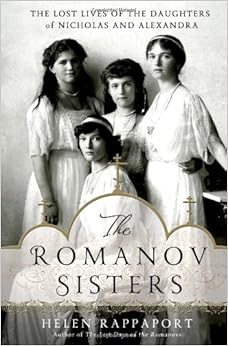
Winner: The Romanov Sisters by Helen Rappaport - 21,118 votes
My Pick: Five Came Back by Mark Harris - 220 votes
My Runner-Up: In the Kingdom of Ice by Hampton Sides - 7,203 votes

Some surprises here. I didn't see the Romanov biography winning at all and thought it would likely go to Karen Abbott's Liar Temptress Soldier Spy or Bill O'Reilly's latest. I also didn't think Five Came Back would only garner 220 votes, one of the lowest overall votes in the entire competition. Harris' book tells the story of five Hollywood directors, including Frank Capra, John Ford and William Wyler who served in the military during World War II. A relative of mine hardly reads or listens to books, but he was completely mesmerized by the audiobook of Five Came Back. When it got knocked out in the later rounds, I switched my vote to Sides' highly-regarded Arctic tale.

There were some other interesting tidbits from the awards results as well...

• The book with the highest number of total votes wasn't Landline, but rather Rick Riordan's The Blood of Olympus, the latest in the Heroes of Olympus series. It took home the gold in the children's category with 63,000 votes cast. Other big vote-getters included City of Heavenly Fire, the latest Mortal Instruments novel. It racked up more than 53,000 votes and handily won the young adult fantasy category. Diana Gabaldon's Written in My Own Heart's Blood also got more than 50,000 votes and coasted to a victory in the romance category.

• The closest vote came in the nonfiction category, though the best debut author category was also very well contested.

To see a full list of the nominees and winners, click here.

Thursday, November 20, 2014

National Book Award Winners

It was a good night to work for Penguin and Farrar, Straus and Giroux last night at the National Book Award ceremony. Penguin books took the honors in fiction and young adult, while FSG walked away the winner in nonfiction and poetry. All four winners are first-time recipients of the award.

Fiction:
• All the Light We Cannot See by Anthony Doerr (Scribner)
• Lila by Marilynne Robinson (Farrar, Straus and Giroux)
• Redeployment by Phil Klay (Penguin Press)
• Station Eleven by Emily St. John Mandel (Knopf)
• An Unnecessary Woman by Rabih Alameddine (Grove Press)

The Winner: Redeployment
My Pick: All the Light We Cannot See
My Runner-up: Station Eleven
Heading into the awards ceremony, I figured it was going to come down to the books by Klay, Doerr and St. John Mandel. All three are on my TBR, though I've read large chunks of the latter two and I've sampled Redeployment. Most of the social media traffic and blogs seemed to favor Doerr and St. John Mandel, though Klay had gotten a lot of attention earlier in the year. All the Light We Cannot See is written in a very lyrical style, while Station Eleven is a wonderfully descriptive take on the well-worn post-apocalyptic genre. Meanwhile, Redeployment is a jarring collection of stories that look at a soldier's life both at war and returning home. Consider the opening paragraph, "We shot dogs. Not by accident. We did it on purpose, and we called it Operation Scooby. I'm a dog person, so I thought about that a lot." Quite the opener for what follows. Much like when The King's Speech won the Oscar in 2010 when I was rooting for Inception and The Social Network, I get why Klay's book won the award, despite not being my first choice. Definitely a worthy winner.

Nonfiction:
• Age of Ambition: Chasing Fortune, Truth and Faith in the New China by Evan Osnos (Farrar, Straus and Giroux)
• Can't We Talk About Something More Pleasant? by Roz Chast (Bloomsbury)
• The Meaning of Human Existence by Edward O. Wilson (Liveright/Norton)
• No Good Men Among the Living: America, the Taliban and the War Through Afghan Eyes by Anand Gopal (Metropolitan/Henry Holt)
• Tennessee Williams: Mad Pilgrimage of the Flesh by John Lahr (Norton)

The Winner: Age of Ambition
My Pick: Can't We Talk About Something More Pleasant?
As someone who initially read only nonfiction books when I resumed reading daily as an adult, I thought I had my finger on the pulse after reading or successfully guessing the last two winners (Katherine Boo's Behind the Beautiful Forevers and George Packer's The Unwinding). Apparently, the judges and I didn't see eye-to-eye on the nonfiction side at all this year. My early picks didn't make it onto the shortlist, then the book I thought would win lost out to Osnos' account of modern China. That isn't to say Age of Ambition isn't good, but that it wasn't on my radar at all until the shortlist. And even then, I thought Chast had it. Consider Age of Ambition the newest addition to my TBR list.

Other winners included Louise Gluck for Faithful and Virtuous Night (Poetry) and Jacqueline Woodson for Brown Girl Dreaming (Young People's). Both Gluck and Woodson are huge names in their respective fields, so it's great to see them finally get a National Book Award to add to their already large trophy cases.

Wednesday, November 5, 2014

Goodreads Choice Awards

UPDATE (12/4/14): The winners have been announced. To see the results, click here or read my take on the winners here.

This week, the annual Goodreads Choice Awards kicked off its first round of voting. There are 20 categories and 15-20 books per category and three rounds of voting. The first one ends Saturday, Nov. 8, the semifinal voting period runs from Nov. 10-15 and the final round of voting goes from Nov. 17-24. More than 825,000 votes have already been cast for the first round.

This is the second year I'll be voting in the awards. I admit, most of these books are on my TBR list because of the backlog of books I have, but more often than not, I've downloaded previews of each book onto my Kindle. Here are three of the categories and some of my picks:

1) Best Fiction
The Storied Life of A.J. Fikry by Gabrielle Zevin (Algonquin)

This category was brutal to pick a winner. Fikry, post-apocalyptic drama Station Eleven and Phil Klay's military tale Redeployment all have spots on my TBR. I've read excerpts for both Zevin and Emily St. John Mandel's novels, even going so far as to buy Station practically unseen. Both Station Eleven and Redeployment are shortlisted for the National Book Award. And yet, I'm giving my vote to Zevin's titular book store owner. The novel's line "No man is an island; every book is a world" is an apt description of the novel's key themes of loneliness, the rapidly changing book industry and a love for reading. What's not to love about that?

Outside of those three, the nomination list is stacked. Rainbow Rowell's Landline is sure to draw her legion of fans as will Jojo Moyes' One Plus One and Liane Moriarty's Big Little Lies, not to mention David Mitchell's The Bone Clocks and Haruki Murakami's latest.

2) Best Memoir & Autobiography
Life, Animated by Ron Suskind (Kingswell)

I admit the chances of Suskind's book advancing to the later rounds is probably slim (other nominees are more high-profile), but I'm rooting for this one out of deeply personal interest. As someone who is a total Disney fanatic and diagnosed with Asperger's Syndrome, I had rapt interest in this book from the moment I read the first excerpt. Below is a Lesley Stahl piece on the Suskind family that aired on CBS Sunday Morning. If you can't see the video below, click here.


The book is up against the likes of Robin Roberts, Elizabeth Warren, Cleveland kidnapping victim Michelle Knight, Boston Marathon bombing survivor Jeff Bauman and The Princess Bride actor Cary Elwes.

3) Best Historical Fiction
All the Light We Cannot See by Anthony Doerr (Scribner)

This was the easiest lock in the entire vote. I've read the first several chapters of this book and it is beautifully written, almost lyrically. This book is a finalist for the National Book Award and has received near universal praise from all over the literary community since its debut in the spring. I'm a sucker for World War II-era books, so this one literally had me at its description of a blind French girl and a German boy who's a whiz at the radio. Their paths eventually intersect in the French coastal town of Saint-Malo as Allied troops prepare to bomb the town.

As for the category itself, it's a good category, even taking into consideration the heavy tilt toward Doerr's novel. Other nominees in this category include Sue Monk Kidd's The Invention of Wings, Lisa See's China Dolls and Jessie Burton's The Miniaturist.

Wednesday, October 15, 2014

The Nominees Get Winnowed Down

The literary world's awards are being handed out or narrowed down this week. The Man Booker Prize was awarded Tuesday to Richard Flanagan's The Narrow Road to the Deep North (Knopf). The novel is a World War II-era love story set in Burma about an Australian doctor in a Japanese POW camp as the Thailand-Burma Railway is being built. Flanagan told attendees, "I never expected to stand here before you in this grand hall in London as a writer, being so honored."

When the Man Booker shortlist was announced, I predicted Flanagan's book as the likely winner and immediately added it to my to-be-read list. For more on Flanagan's win, go here.

Stateside, the shortlists for the National Book Award were announced this morning on NPR's "Morning Edition." Three of the five fiction nominees are on my TBR, including Anthony Doerr's All the Light We Cannot See (Scribner), which I've had pegged as an awards contender since reviewers started buzzing about it back in the spring. The other titles that made the cut were Phil Klay's Redeployment (Penguin Press) and Emily St. John Mandel's Station Eleven (Knopf) along with Marilynne Robinson's Lila (Farrar, Straus and Giroux) and Rabih Alameddine's An Unnecessary Woman (Grove Press). Despite literature being a subjective art form, there has been universal praise for the fiction nominees from critics and readers alike. On Goodreads, Doerr's book ranks the highest with a 4.19 rating currently with Station Eleven and Lila not far behind.

The nonfiction side was missing my two TBR picks, Ronald Rosbottom's When Paris Went Dark (Little, Brown) and Walter Isaacson's The Innovators (Simon & Schuster). Instead, other works that mostly focused on contemporary topics got the nod. John Lahr's behemoth Tennessee Williams biography (Norton), Roz Chast's memoir Can't We Talk About Something More Pleasant? (Bloomsbury), Age of Ambition by Evan Osnos (Farrar, Straus and Giroux) explores modern China, No Good Men Among the Living by Anand Gopal (Henry Holt) looks at Afghanistan and The Meaning of Human Existence by Edward O. Wilson (Liveright/Norton) made it to the shortlist. I'm not surprised by Norton's dominance and at this point expect Lahr's biography to be the winner but I can't say I'd be disappointed with a Chast win.

The winners will be announced Nov. 19. For complete coverage of the award's shortlist, go here.

My sympathies to Richard Powers, whose book Orfeo did not win either the Man Booker or make it onto the shortlist for the National Book Award. It was on the longlist for both. I was also pulling for John Darnielle's Wolf in White Van, but it also did not make the National cut.

Is there a book you're rooting for? Did it make the cut?