Showing posts with label Five Came Back. Show all posts

Friday, March 6, 2015

Film Friday: Five Came Back

Five Came Back: A Story of Hollywood and the Second World War (2014)
Written by Mark Harris
Narrated by Andrew Garman
Publisher: Recorded Books/Penguin
Run Time: 20 hours 1 minute

Amid the glitz and the glamour of Hollywood's Golden Age, the war that spanned the globe called five men to act.

Five Came Back is a very thorough, completely engrossing and stellar history of five Hollywood directors who were compelled to get involved in World War II, even as America was slow to follow. The Hollywood of the late 1930s and early 40s was one of powerful studio titans with vice grips on actors and actresses, a government-mandated production code that creatives hated and an industry that some in Washington feared had too much of an ability to influence.

As Nazi Germany continued to invade countries in central and western Europe, Hollywood was getting concerned about what was almost exclusively referred to as "the war in Europe." Some directors sought to make movies about the war, but isolationism in America dictated the box office. Few studio bosses wanted to be seen as war mongers. While not referenced directly in Harris' book, I suspect that these directors and screenwriters that wanted to spotlight "the war in Europe" thought and acted like Humphrey Bogart's Rick in Casablanca when he says, "I bet they're asleep in New York. I bet they're asleep all over America."

And then, the attack on Pearl Harbor changed most everyone and everything. Few isolationists retained their pre-December 7th views and America was at war.

Directors John Ford, George Stevens, John Huston, William Wyler and Frank Capra all joined the military and offered their expertise in making movies in service to the war effort. Each director and their contributions to the war effort, at a time when countries waged "total wars," are remarkably researched and delineated from each other by Harris. For example, Ford was the gung-ho type who served in the Navy and directed this film on the Battle of Midway:

The directors went to both the Pacific and European theaters of war, all while chronicling both the experiences of soldiers as well as their own ordeals. Capra opted to make a series of informational videos, known as the Why We Fight series:


Heading into the book, I was most familiar with Ford and Capra's work, thanks to Stagecoach and It's a Wonderful Life, my favorite Christmas movie. Wyler, however, turned out to be my favorite of the five that Harris follows in his book. The director, an immigrant from the often fought over Alsace-Lorraine region of France that borders Germany, wanted to make a difference for both his adopted and native lands. Wyler, like many of the men who returned from World War II, suffered physical and mental anguish as a result of his time in Europe. Arguably, he had the greatest tragedies and triumphs in the book.

Other cultural and historic icons make their way into Harris' pages, including a humorous portion involving Theodore Geisel, the man who would later be better-known as Dr. Seuss. Also, Harris documents the five directors' time before and after the war so well, including Capra's making of It's a Wonderful Life and its subsequent flop at the box office, that they were part of the natural ebb and flow of the story. I was as invested in these sections as I was the descriptions of the filming in combat.

The book is one of the best nonfiction titles I've read. While a knowledge of early cinema is helpful, it isn't required to enjoy the book and as a result, caters to a wider audience than some would think. Earlier this week, the book was named as a finalist in the history category of the Los Angeles Times Book Prizes of 2014.

I had initially opted to hold out for the paperback version, but after hearing rave reviews from family and the online film community, I snagged the audiobook. Garman does an admirable job of showcasing the material and helping give each person a distinct narrative.

I cannot recommend this book enough. 5/5 stars.

Five Came Back is available in hardcover, ebook, audio and a just-released paperback edition.

Thursday, December 4, 2014

Goodreads Choice Award Winners

The winners of the Goodreads Choice were announced this week. More than 3.3 million readers cast votes for their favorite books of the year.

Best Fiction
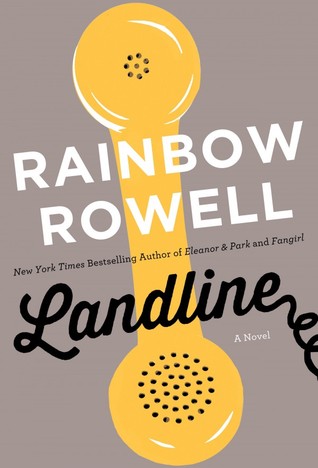
Winner: Landline by Rainbow Rowell - 46,154 votes
My Pick: The Storied Life of A.J. Fikry by Gabrielle Zevin - 19,818 votes
My Runner-Up: Station Eleven by Emily St. John Mandel - 11,608 votes

This category was going to be a slugfest from the word go and it didn't disappoint. As I expected, Rowell's fans came out in droves, as did avid readers of Liane Moriarty, who came in second place. Zevin's novel came in third, better than where I thought it would end up. Station Eleven came in ninth place, but it had an uphill battle since it was released in September, whereas the others had summer and spring publications. If anything, the fact that it didn't finish any lower is a testament to how well it was received in the short time period between publication and award nomination. Redeployment, winner of the National Book Award, came in 14th place.

Best Historical Fiction
Winner: All the Light We Cannot See by Anthony Doerr - 41,512 votes
My Pick: Same

This book is on dozens of best books of the year lists, has received universal acclaim and was shortlisted for the National Book Award. So it's no surprise that it cleaned house in the historical fiction category. Sue Monk Kidd's The Invention of Wings and Ken Follett's Edge of Eternity made solid efforts, but in the end, the World War II-era tale was the victor.

Best Mystery and Thriller
Winner: Mr. Mercedes by Stephen King - 41,453 votes
My Pick: The Silkworm by Robert Galbraith (aka J.K. Rowling) - 41,034 votes

419 votes. That was the difference between the gold and silver in this category. By the hair of it's chinny-chin-chin, Mercedes took the top spot. While other books like Janet Evanovich's Top Secret Twenty One and Tana French's The Secret Place had decent votes, the proverbial air was sucked out of the category by Silkworm and Mercedes. I grew up on Rowling's writing, so I favored her writing, which is more of a detective mystery compared to King's novel, which has a more sinister tone. That isn't to say that I disliked Mr. Mercedes, especially since it was on my TBR list at one point. My vote was more about which style I tend to prefer rather than the quality of writing.

Best Memoir and Autobiography
Winner: This Star Won't Go Out by the Earl Family - 27,850 votes
My Pick: Life, Animated by Ron Suskind - 1,131 votes
My Runner-Up: As You Wish by Cary Elwes - 24,111 votes

Consider this category Exhibit A for the power of John Green's Nerdfighters. As I wrote on my previous post, I was rooting for Ron Suskind's book, but suspected that it would not make it to the final rounds. When it was eliminated, I switched my vote to Elwes' memoir on the making of the 1987 film The Princess Bride. Despite having a late publishing date, it did really well, likely from all the movie's large fan base. And yet, it didn't top a John Green-backed book about a cancer victim that helped inspire Green's book The Fault in Our Stars. The lauded crematorium memoir Smoke Gets in Your Eyes by Caitlin Doughty, which has appeared on a number of top book lists, came in eighth place.

Best History and Biography
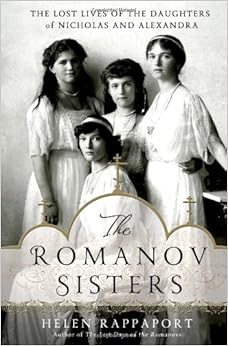
Winner: The Romanov Sisters by Helen Rappaport - 21,118 votes
My Pick: Five Came Back by Mark Harris - 220 votes
My Runner-Up: In the Kingdom of Ice by Hampton Sides - 7,203 votes

Some surprises here. I didn't see the Romanov biography winning at all and thought it would likely go to Karen Abbott's Liar Temptress Soldier Spy or Bill O'Reilly's latest. I also didn't think Five Came Back would only garner 220 votes, one of the lowest overall votes in the entire competition. Harris' book tells the story of five Hollywood directors, including Frank Capra, John Ford and William Wyler who served in the military during World War II. A relative of mine hardly reads or listens to books, but he was completely mesmerized by the audiobook of Five Came Back. When it got knocked out in the later rounds, I switched my vote to Sides' highly-regarded Arctic tale.

There were some other interesting tidbits from the awards results as well...

• The book with the highest number of total votes wasn't Landline, but rather Rick Riordan's The Blood of Olympus, the latest in the Heroes of Olympus series. It took home the gold in the children's category with 63,000 votes cast. Other big vote-getters included City of Heavenly Fire, the latest Mortal Instruments novel. It racked up more than 53,000 votes and handily won the young adult fantasy category. Diana Gabaldon's Written in My Own Heart's Blood also got more than 50,000 votes and coasted to a victory in the romance category.

• The closest vote came in the nonfiction category, though the best debut author category was also very well contested.

To see a full list of the nominees and winners, click here.